For three years now, this successful lunchtime debate series has brought together more than 100 regular attendees to gain deep, investigative insights into climate research, politics, and economics.
Led by a high-profile international hosting team - including Ajit Niranjan (The Guardian) and Theresa Leisgang (founder of the German Climate Journalism Network) - the project kicks off in September 2026, featuring a series of online briefings alongside two live networking event in Vienna and Munich.
By bringing top-tier global researchers directly to the lunch hour, the project equips reporters with the latest scientific framing and actionable insights to elevate climate journalism across borders.
The series includes five online events:
29.9. | Climate Diplomacy: What Really Happens Behind Closed Doors
with Jochen Flasbarth, State Secretary at the German Climate Ministry (BMUKN)
The deals that actually shape the outcome of a global climate summit like COP31 are often negotiated without journalists present. Jochen Flasbarth, German State Secretary and longtime climate negotiator, joins us to discuss how geopolitics and fossil fuel interests intersect at the negotiating table. A briefing for all colleagues who want to understand the structures behind the summit, not just the final communiqué.
13.10. | Big Oil's Playbook: How Disinformation Crossed the Atlantic
with Amy Westervelt, Investigative Journalist, Drilled.Media
The US fossil fuel industry has delayed climate action for decades. Investigative journalist Amy Westervelt has traced how the same tactics, messages, and personnel now shape the debate in Europe. In our press briefing, she'll explain how corporate influence campaigns adapt across borders, and what to watch for in your own reporting. A briefing for all colleagues who want to recognize industry playbooks before they set the news agenda.
20.10. | Climate Futures: Reading the Warning Signs
with Celeste Saulo, Secretary-General WMO
This summer's wildfires and heat records dominated headlines across Europe, but most media outlets failed to make the climate connection. WMO chief Celeste Saulo explains the underlying patterns and how the climate phenomenon El Niño will shape future extreme weather events. In our press briefing, she will unpack what current climate indicators suggest about the scenarios ahead, and the underreported risks she's watching most closely. A briefing for all colleagues who want to move past “hottest summer on record” and ask what this means for society in the years to come.
27.10. | High-Impact Climate Action: What Matters Now
with Kimberly Nicholas, Professor at Sustainability Centre, LUND University
"What can I do about the climate crisis?" This is a question we often get – and for years, the go-to answer has been recycling and reusable straws. Climate scientist Kimberly Nicholas says the data tells a different story: voting, she's found, can carry up to 162 times the climate impact of recycling. In our press briefing, she'll share which high-impact actions the research backs – and which ones journalists can stop recommending. A briefing for all colleagues who want their climate coverage to help people take better decisions.
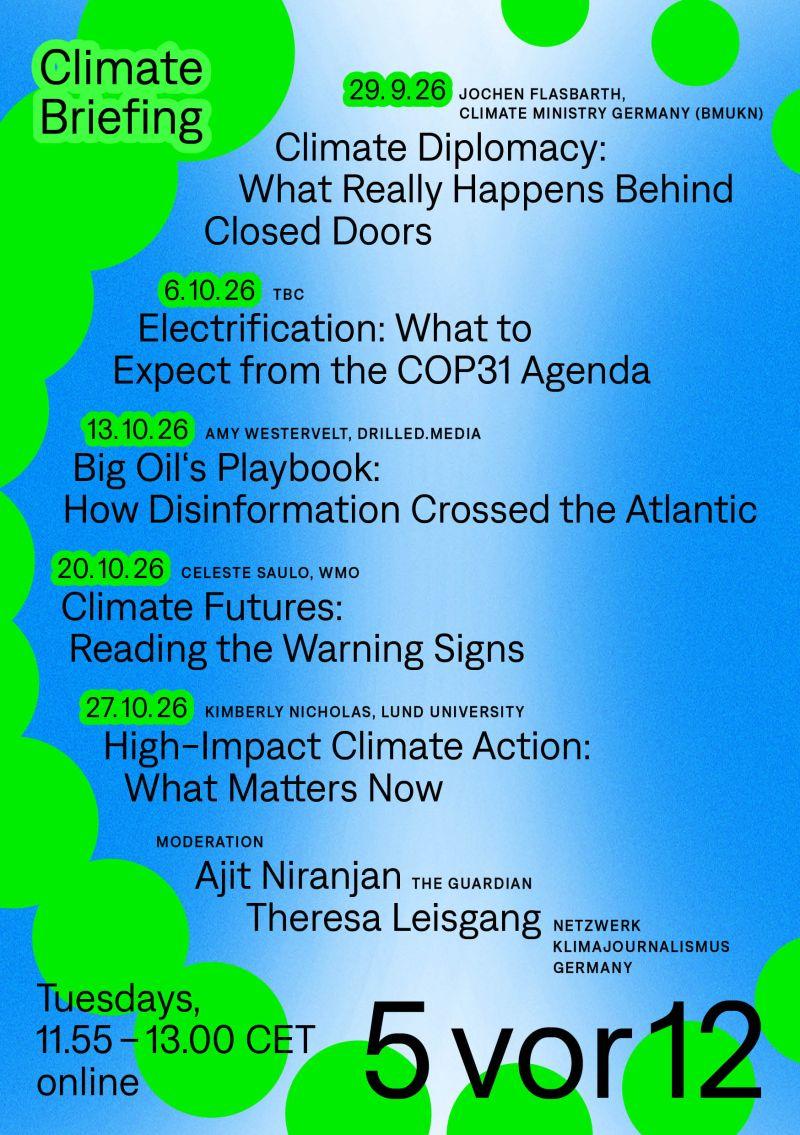
Image by Netzwerk Klimajournalismus Deutschland