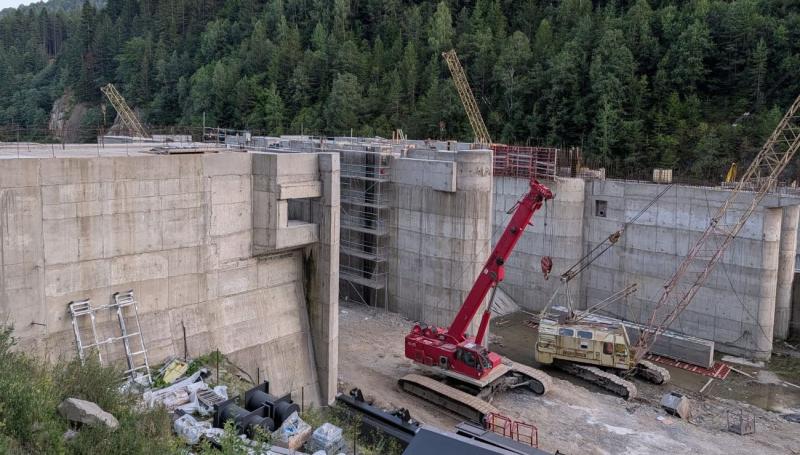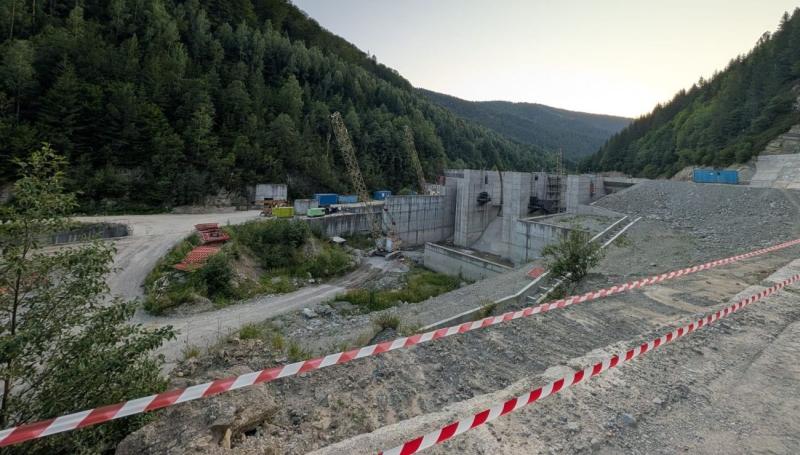
Dams of the Past, Costs of the Present is a cross-border investigation into large hydropower projects in Romania and Bosnia & Herzegovina. First conceived during the communist era (before 1990) they were resumed in recent years, without taking into account technological developments, climate change and in areas that have meanwhile acquired a biodiversity protection regime, with different economic, social and environmental challenges. Despite criticism from experts and opposition from local communities and environmental activists, the projects are moving forward due to the financial interests and political connections behind them.
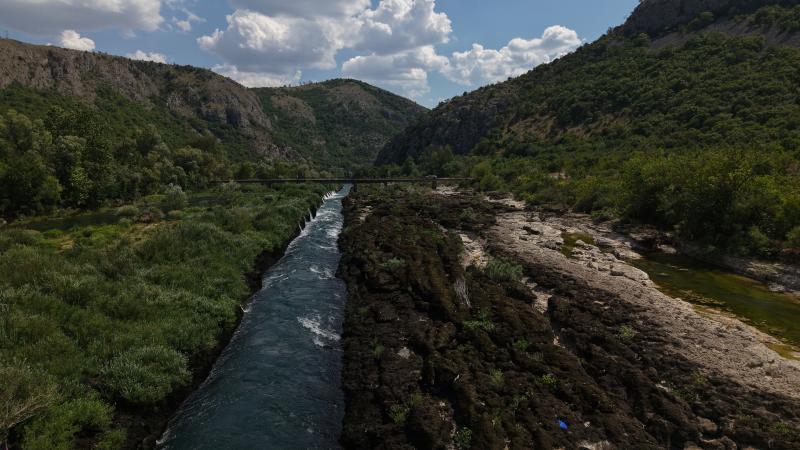
In Bosnia & Herzegovina, the investigation focuses on the Upper Horizons hydropower scheme, which diverts water through the complex karst system of eastern Herzegovina for electricity production, potentially affecting the Neretva basin and its tributaries to the Adriatic Sea.
In Romania, the projects on the Jiu (Bumbești-Livezeni), Bâsca Mare (Surduc-Siriu) and Răstolița rivers were investigated in particular, because they affect several national parks and Natura 2000 sites, as well as the communities that depend on them.
Together, the cases and stories ask a central question: why are these projects being resumed now, especially given their outstanding financial cost and environmental damage, compared to existing alternatives (wind, solar and battery storage)?
Key findings
- The Upper Horizons system (Bosnia & Herzegovina) will permanently redistribute water through one of the most complex karst areas in Europe, with potential consequences for the Buna, Bunica and Bregava rivers and the wider Neretva basin. Scientists and environmental groups warn that reduced freshwater flows could increase pressure on ecosystems, endemic species, agriculture and downstream communities, including the Neretva delta in Croatia.
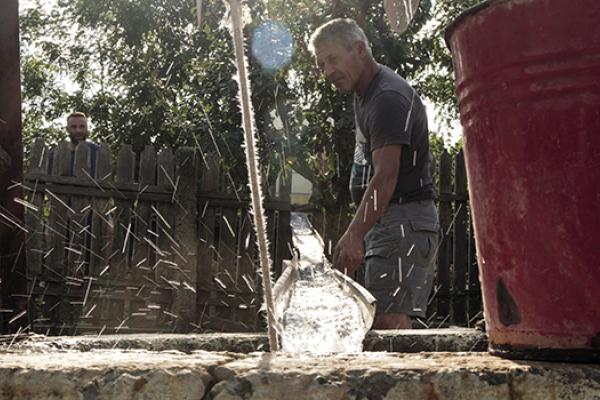
- The Bumbești-Livezeni project (Romania) involves the capture and dewatering of approximately 30 kilometres of the Jiu River, which is a defining and essential part of the Jiu Gorge National Park. The Răstolița project (Romania) affects the Călimani National Park, a Natura 2000 site, and other protected areas downstream on the Mureș River. The Bâsca Mare dam (Romania), also a piped diversion project (like the Jiu dam), risks leaving a community with several thousand inhabitants who depend on it without water (drinking water, agriculture, livestock farming, tourism).
- Romania’s energy crisis during summer 2026, was caused by historical minimum flows of the Danube and inland rivers. This confirmed the warnings expressed by specialists, according to which the projects in question will be useless (due to the lack of water) and will not ensure even the expected marginal contribution (less than 1%) to the national energy system. The remaining amounts spent (approximately 450 million euros, only in the case of the three projects investigated) would be sufficient for the installation of solar panels and storage batteries with an installed capacity several times higher.
- However, in Bosnia & Herzegovina as well as Romania, the development of the projects are moving forward despite disputes over their environmental impact and calls for a reassessment based on contemporary scientific knowledge and climate conditions.
- Hundreds of millions of euros are involved in the construction and financing of these projects, while questions remain about transparency, public oversight and the long-term financial risks borne by public institutions and companies with majority state capital.
- The investigation reveals a fundamental conflict between policymakers who present hydropower projects as strategic energy infrastructure and scientists, environmental organizations and affected communities who argue that the half-baked projects need to be reassessed both economically and socially, and above all, before their environmental consequences become irreversible.
Methodology
The investigation combines field reporting, interviews, requests for information and public positions, participation in parliamentary debates, analysis of documents and open source information (OSINT), and cross-border collaboration between journalists from Romania and Bosnia & Herzegovina. Reporters visited the areas affected by the hydropower projects and interviewed local residents, scientists, representatives of civic organizations (local and/or environmental), government representatives, lawyers, public officials, and experts in water engineering, biodiversity, energy and public finance.
Findings from the two countries were compared to identify common patterns in the implementation of hydropower projects conceived decades ago, under fundamentally different environmental, political, and economic conditions.
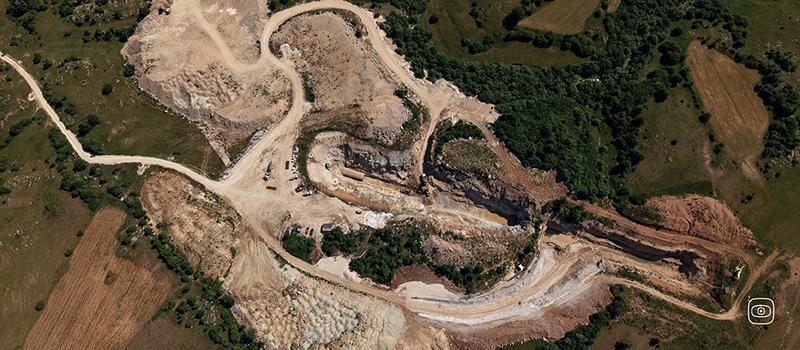
Photo above: Upper Horizons dam, aerial view.
Photos in the gallery below: Weir on the Bâsca Mare River (Surduc-Siriu Hydropower Project/ Romania) © Mihai Goțiu