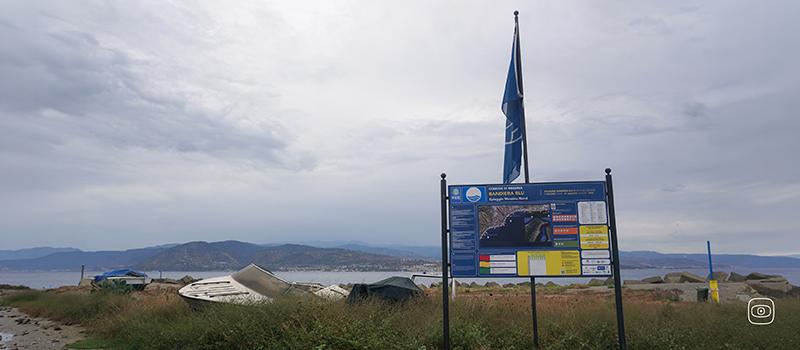
Every summer, the Blue Flag tells beachgoers that a beach meets strict environmental standards, and one of the scheme’s criteria is that urban wastewater is properly treated. Yet Italy is among the worst performers in the European Union under the Urban Waste Water Treatment Directive. The EU Court of Justice has condemned it repeatedly, and it paid more than €210 million in penalties by the end of 2024. Croatia, on the other side of the Adriatic, is also still far from compliance. The Dirty Adriatic asks how the two are able to coexist: how can a certification that guarantees clean water be awarded along coastlines where the public record says wastewater is not properly collected or treated?
The investigation compares official record systems that normally never meet. These are the countries’ own reporting to the European Union on wastewater collection and treatment, the Blue Flag lists and awarding rules, rulings by the EU Court of Justice, and independent bathing-water sampling. It then follows the money and the paperwork behind the certification: who pays for it, with which public funds, and which documents municipalities submit to obtain it. The story comes at a turning point. From 27 September 2026, EU Directive 2024/825 on green claims tightens the rules on sustainability labels and environmental claims presented to consumers.
Methodologically, the team rebuilt Italy’s national submissions under the directive across several reporting cycles and linked them spatially to Blue Flag sites. The findings show inconsistencies and overlaps between official sources, not causal claims. They are backed by around twenty freedom-of-information requests to municipalities, regions, and environmental agencies, municipal administrative records, and field reporting on the Italian and Croatian coasts.