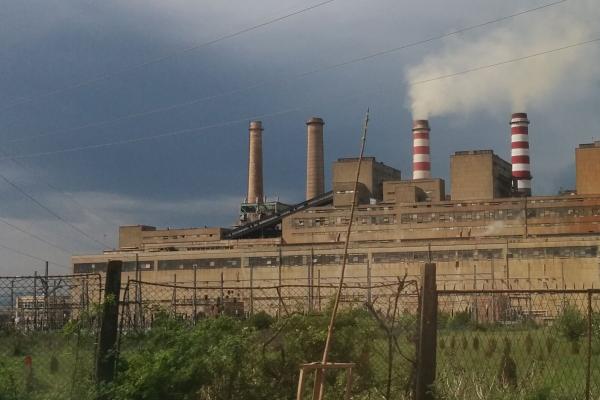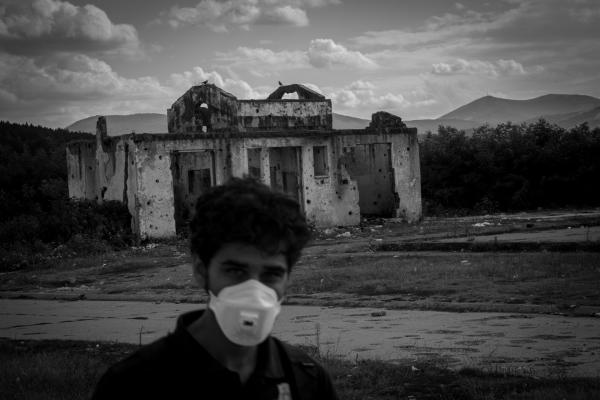
From Kuršumlijska Banja on one side of the border to the villages of Podujeva on the other, local residents share the same unsettling reality. Radivoje Đorđević, who spent fifteen years doing this for a living, notes that unlike legal, regulated forestry, illegal logging is completely indiscriminate. Just across the border line in Hertica, hundreds of hectares of public forests are now on the verge of total destruction, with unpaved roads providing easy access for transporting timber.
Data from state forest enterprises reveals a staggering volume of illegally cut timber since 1999, resulting in billions of RSD in losses and immense environmental degradation. Despite these severe consequences, the phenomenon continues due to complex socio-economic factors, lenient court fines, and significant institutional challenges in cross-border coordination.
What is the exact scale of the timber volume lost over the years? How are local police and forestry agencies tackling this issue, and why have some key ministries failed to respond?
Key Findings:
- Scale and Financial Damage (1999–2025)
Total Timber Volume: Between 1999 and 2025, a total of 1,160,600 m³ of timber was illegally cut down along the Kosovo–Serbia border in Serbia.
Financial Loss: This activity represents a direct loss of 4,657,052,240 RSD (over 4.6 billion RSD), according to data from the "Srbijašume" State Forest enterprise.
Visual Comparison: This volume of wood is enough to fill nearly 9 entire halls of the Palace of Youth and Sports in Pristina, 2.9 "Rajko Mitić" stadiums, or 3.3 JNA stadiums.
- Most Affected Locations and Forest Estates
FE "Toplica" (Kuršumlija): Worst hit, accounting for 528,887 m³ of the illegally logged timber.
FE "Šuma" (Leskovac): Ranks second with 340,198 m³.
FE "Vranje" (Vranje): Ranks third with 256,134 m³.
Other areas: FE "Šumarstvo" Raška recorded 27,686 m³, and FE "Rasina" Kruševac recorded 5,695 m³.
Podujeva Region (Kosovo): In the Hertica–Turiqica region (compartment 128), around 510 hectares of public forest are on the verge of total destruction.
- Five-Year Trends (2021–2025)
In the last five years alone, 117,088 m³ of timber volume was illegally cut along the border area.
National Comparison: For context, during the same period across the entire Republic of Serbia, 41,349 m³ was logged in state forests and 115,929 m³ in private forests, highlighting the extreme intensity of logging specifically in the border zone.
- Methods and Drivers of Illegal Logging
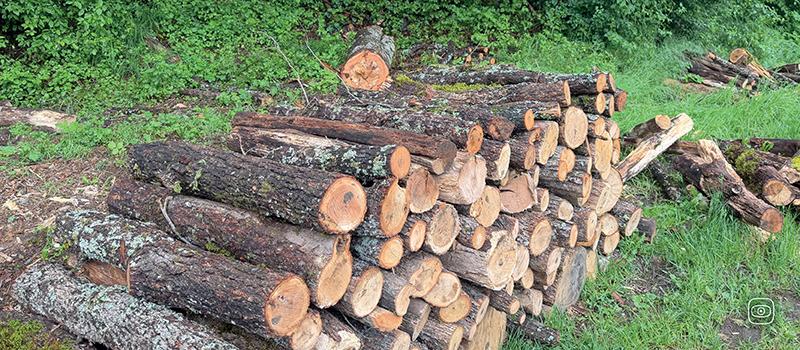
Indiscriminate Cutting: Unlike legal logging where only marked, sick, or crooked trees are cut, illegal logging clears everything in sight (primarily beech, oak, hornbeam, and Turkey oak for firewood).
Infrastructure Factor: Poorly developed infrastructure and unpaved roads facilitate logging, as cutting happens right along roadsides for easy motor vehicle transport.
Core Drivers: Multiple factors fuel the issue, including the socio-economic situation, high market demand for firewood, unresolved property-rights relations, and institutional gaps.
- Institutional Responses and Legal Obstacles
Judicial Issues: Lenient fines and difficulties securing the burden of proof during court proceedings fail to deter illegal loggers.
Police Records (2025): The Kosovo Police opened only 15 cases classified as “forest theft” in Podujeva, along with 4 additional cases reported by the Border Police.
Institutional Silence: Neither Serbia’s Ministry of Internal Affairs nor Serbia's Ministry of Agriculture, Forestry, and Water Management provided responses to journalists.
Kosovo Action Plan: The Kosovo Forest Agency (KFA) monitors timber transport but admits it faces difficulties combatting the issue in border areas without close coordination with the police, customs, and courts.
- Environmental Impact
According to experts, clear-cutting and forest devastation alter species composition, change forest structure, and lead to nutrient depletion.
Deforestation heavily degrades essential forest functions, including air purification, carbon dioxide binding, soil erosion protection, biodiversity preservation, and water regime regulation.
Methodology:
- This research methodology combined quantitative and qualitative investigative journalism methods. The investigation began with desk research and data collection. This involved submitting official requests to state forest enterprises like Srbijašume and the Kosovo forest agency (KFA) to gather localized data on logged timber volume and estimated financial losses.
- Once the documentary foundation was established, the methodology transitioned into field research and environmental documentation on the ground. We captured high-resolution photo evidence of illegal logging. This also included tracking the unpaved, informal roads.
- The qualitative layer of the methodology relied on interviews to gather human testimonies. This included interviewing border village residents from areas like Kuršumlijska Banja and Podujeva to document eyewitness accounts of environmental changes and localized soil erosion. Furthermore, interviews were conducted with forestry professors and environmental scientists to detail long-term impacts. Before drafting the final report, rigorous fact-checking and data triangulation were applied.
Photo by Ganja Nikolić, Firewood