
Investigative teams consisted from two to eight applicants.
Each year, the Earth Investigations initiative has attracted a growing number of applicants, reflecting increased trust in the initiative as well an interest from a widening community of journalists committed to bringing to light underreported environmental and climate issues.
Since this grant's launch in late 2021 and until today, Journalismfund Europe has backed more than 350 environmental investigations across Europe and beyond.
This year, 87 new teams chosen by our jury started to work on new projects, and at the same time, many projects funded in earlier rounds were published throughout the year, reinforcing the programme’s role as a sustained engine for long-term, cross-border journalism rather than a one-off grant scheme.
Themes that received special attention this year include biodiversity threats, critical minerals, climate finance, pollution, deforestation, agriculture, and water governance.
In 2025, more than 70 investigations, supported in earlier rounds, were released and reached more than 45 million views.
The range of publication themes ranges from the environmental and social costs of Europe’s energy transition to the impacts of tourism, industrial farming, and conservation policies on local communities across Europe and beyond.
One project that stood out this year for its entirely new findings and its intersection of multiple critical issues was Toxic Legacy. The investigation exposed a problem that European governments had never properly measured before, connecting waste management, climate change, and public health through a single, continent-wide dataset.
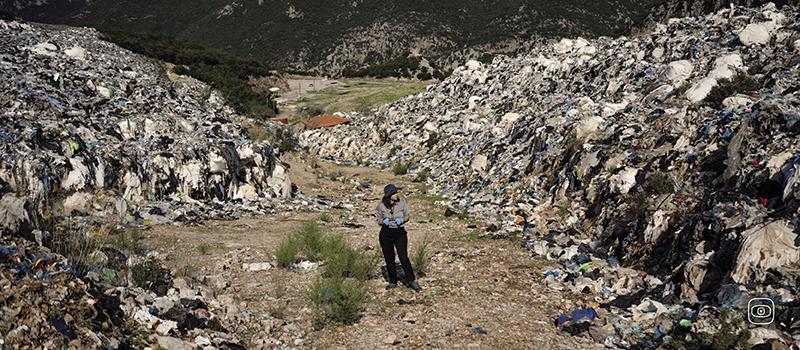
The large, cross-border team that worked on this project assembled thousands of datasets, filed extensive freedom of information requests, and collected local records to construct the first Europe-wide landfill risk map, filling a major blind spot in environmental governance.
Before this project, there was no comprehensive public map of Europe’s landfills, nor any systematic assessment of their environmental and public-health risks.
Where records did exist, they were fragmented, inconsistent, and often buried within national bureaucracies.
The investigation went further by overlaying landfill locations with flood zones, erosion-prone areas, groundwater vulnerability maps, and protected ecosystems. The results revealed tens of thousands of sites located precisely where climate change is expected to make them most dangerous: floodplains, coastal areas, and drinking-water catchments. In doing so, the project demonstrated how climate change is turning old dump sites into future chemical release points — a connection that had been largely absent from policy debates until now.
Another important investigation is a clear illustration of how biodiversity is closely linked with practical and political questions. In Making Space for Bison in Europe the journalists from Poland, Romania, and Spain examined the consequences of the return of the European bison. They could see it as not simply as a conservation success, but as a stress test for human–wildlife coexistence.
Rewilding initiatives can collide with agriculture, political interests, and competing ideas of what “wild” means in densely populated landscapes.
The findings make clear that species recovery is not just a biological process but a deeply social one. In some regions, farmers sought compensation for damage caused by bison; in others, authorities struggled with the long-term management of free-roaming herds. At the same time, privately driven rewilding projects raised unresolved questions about responsibility, transparency, and public oversight.

The investigation also exposed how fragmented national approaches to bison management mirror Europe’s broader difficulty in reconciling biodiversity goals with local livelihoods. In the absence of a shared European framework, countries operate under sharply divergent legal regimes, sometimes exploiting inconsistencies in each other’s legislation to justify opposing outcomes — protection in one case, culling in another. One Polish initiative even attempted to invoke Spanish law. The bison thus became a particularly revealing case: not because its status is unclear, but because contradictions are built into the regulatory landscape itself.
Stepping back from the policy specifics, the investigation offers a lesson that resonates far beyond Europe. Conservation cannot be treated as a fixed endpoint or a self-evident success, but as a dynamic process that demands ongoing reassessment as ecosystems, populations, and social conditions change. Biodiversity is not static, and neither can the laws that govern it be.
The investigation results seemed to emphasise a key lesson: protecting biodiversity means confronting conflict, not avoiding it.
Shifting public attitudes remains one of the most persistent challenges, making knowledge exchange crucial.
We are looking forward to all the findings that will come out with the support of Environmental Investigative Journalism grant in 2026!
