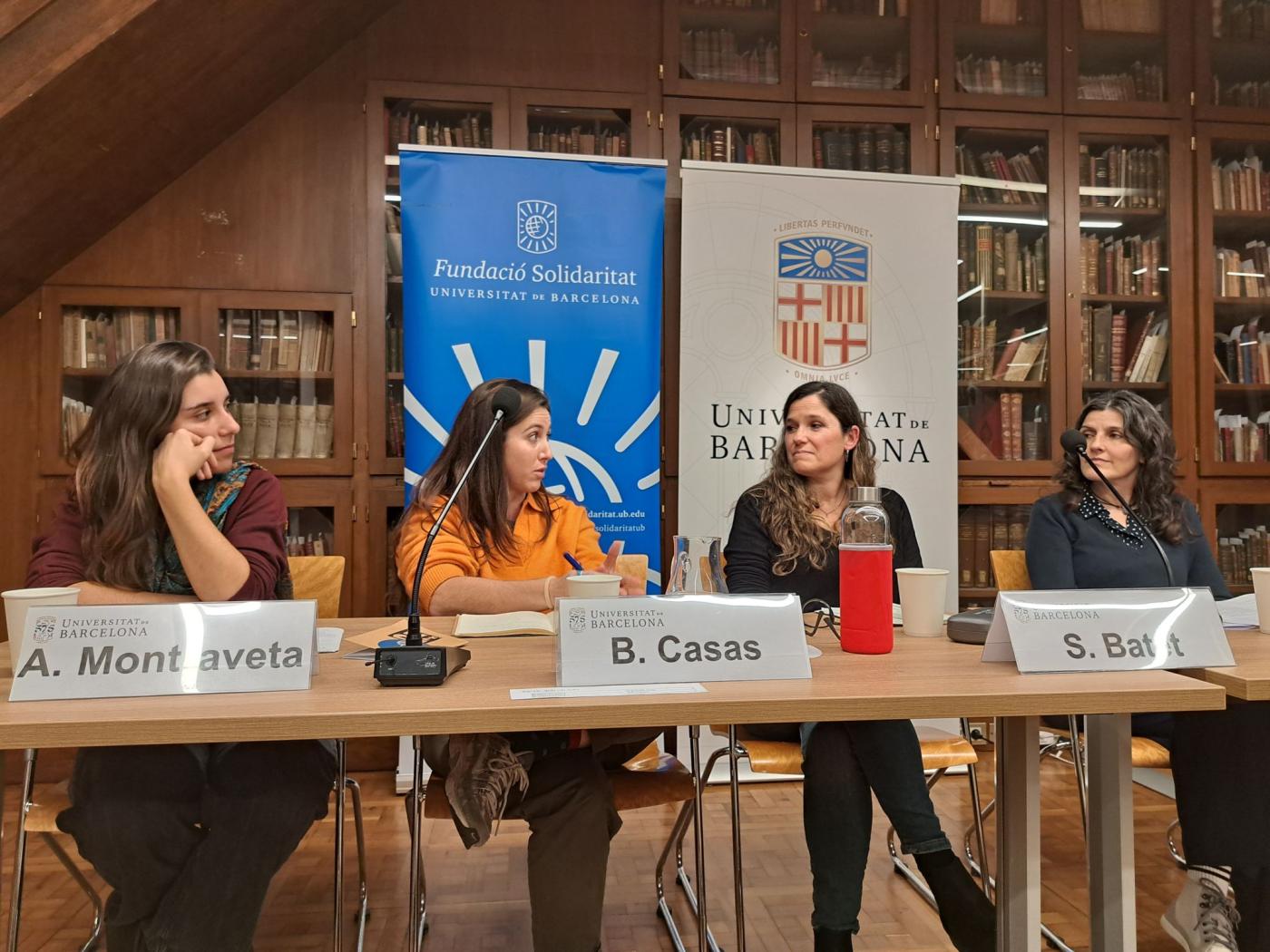
The event, which took place at the University of Barcelona on 3 December, brought together academics, researchers, and professionals from both sides of the Mediterranean, including Spain, Morocco, and Tunisia, with the aim of recognizing and asserting the role of women in science and the fight against climate change.
During a round table on “Transformative Education, Journalism and Climate Change,” journalists discussed the decline of Mediterranean artisanal fishing, highlighting how overfishing, regulatory pressures, and climate change threaten local communities and ecosystems. They outlined how their narrative and journalistic approaches helped translate the climate crisis into accessible and relatable stories for the audiences, and highlighted a key finding: that the decline of Mediterranean artisanal fishing is not only an environmental concern but also a threat to local communities’ livelihoods and cultural traditions.
In journalism, it is important to create alliances with academic researchers in order to obtain in-depth, rigorous information with a scientific background. – Anna Montraveta Riu
The event also included discussions on climate change and environmental risk management, water and microbiology, and presentation of such scientific initiatives as the Mediterranean Climate Change Observatory, the Floodbuilding Observatory of Catalonia and the Barcelona Climate Action Plan.
Further, the focus was also placed on the importance of environmental education and how journalism is a tool for media literacy. It was concluded that it is very important to join forces between educational resources, academia and journalism to inform students about climate issues and encourage their critical thinking.
The interaction demonstrated how journalism and academia can reinforce each other. Such journalistic work gives researchers a lens on how communities experience environmental challenges, enhancing research and enriching data-driven insights.