
The project reversed the usual direction of local reporting: rather than covering young people from disadvantaged areas, Made in Perpignan handed them the reporting tools. Their stories replaced statistics on poverty and remoteness with local initiatives and inspiring figures - a shared community fridge in an isolated village, girls claiming their place in a mixed football team, a capoeira master in the city centre, young manga artists from the Saint-Jacques district. The newsroom, in turn, learned from their formats, their language and their choice of interviewees.

© Made in Perpignan
On this page
Project Activities
Six Sessions, And A Newsroom That Had To Unlearn Its Habits
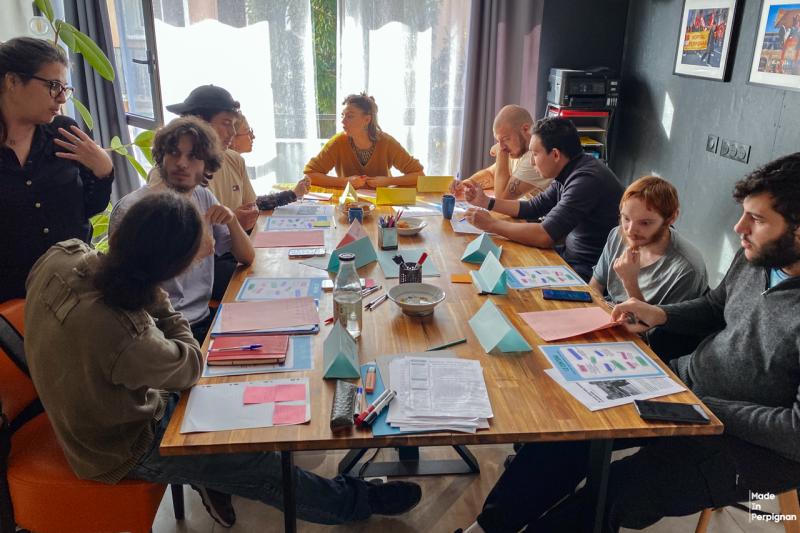
Made in Perpignan had tried this before. "We'd dabbled in junior newsrooms and editorial collaborations with schools, but it was start and stop, and a challenge to maintain," says journalist Mona Bru, who oversaw the project. This time the newsroom built the structure first: a glossary, a trainers' guide, participant fact sheets, exercises drawn from its own published work - a full six- session cycle that could be run again.
Recruitment went through the ground rather than the classroom. Working with local organisations that support school dropouts, isolated rural communities and the city's poorest districts, the newsroom brought in 22 young people aged 18 to 25 across successive cycles.
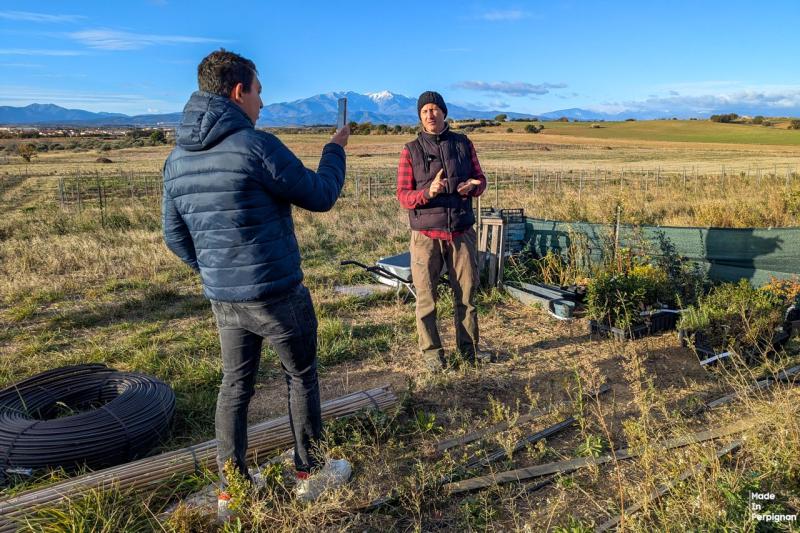
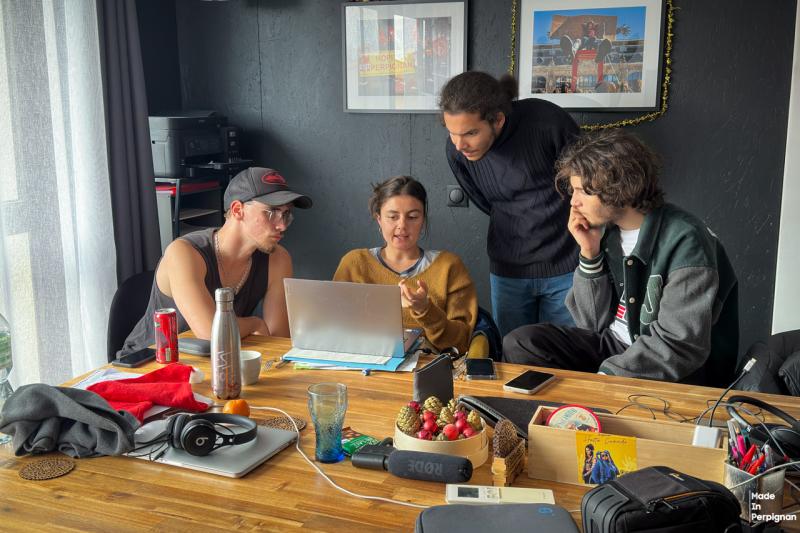
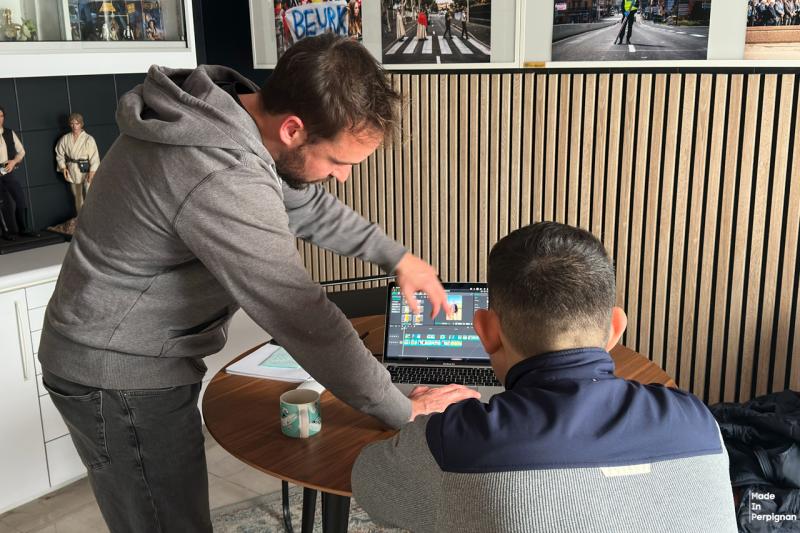
The first two sessions dealt with a question most training programmes skip: what actually counts as information. Participants dissected the journalism they encounter daily on social platforms, learned to tell reporting from content, and were introduced to how an editorial policy is decided. Then they chose their own subjects. The next three sessions were spent almost entirely in the field - sourcing, interviewing, filming, writing, editing, with the newsroom supervising each stage. A final session prepared the work for publication.
Fourteen Stories, Chosen By The Reporters Themselves
The subjects that emerged were not the ones the newsroom would have commissioned. A shared community fridge in an isolated village. Girls claiming their place in a mixed football team. Free menstrual protection dispensers in Saint-Paul-de-Fenouillet. A capoeira master in the city centre. Young manga artists in Saint-Jacques preparing their first volume. Fourteen articles were published on madeinperpignan.com, each paired with a video shot and edited by its author.
Every week a report appeared, it was given a dedicated slot in the outlet's newsletters under the banner Perpignan Stories. The vertical videos, meanwhile, became the launch content for Made in Perpignan's TikTok channel - a platform the newsroom had never used. Media literacy was assessed before and after each cycle, and the whole model was written up internally so it can be run again.
What is the impact?
Where Local Reporting Rarely Goes, The Trainees Went Three Times
The village of Saint-Paul-de-Fenouillet makes the case plainly. This rural community has historically drawn little sustained media attention - including from Made in Perpignan itself. The project produced three separate reports from the village, each requiring repeated visits. What began as reporting became a relationship, particularly with the young people who commute daily between the village and Perpignan. But the project also exposed a second, less visible form of news desertification. Districts such as Saint-Jacques and Le Vernet are not short of coverage in quantitative terms; they are short of range.
Reported almost exclusively through crime and poverty, they had become a single story told repeatedly. The participants brought other ones. "The poverty and remoteness remain a fact," says Mona Bru, "but just going there with the young trainees gave us new ideas and revealed that there are other stories to report on from those parts of our district." The newsroom has since begun reworking its editorial treatment of disadvantaged areas across the board.
A Mayor Saw The Video, And Made A Phone Call
The clearest change was one of position. The participants appeared not as the subject of a report but as its author - and the difference travelled. After one trainee's story on community fridges went out on Facebook, a local mayor watched the video, called her and told her he needed to work with her. He is seventy. She is now on his team.
Others carried the training elsewhere. Two re-enrolled for a second cycle. Two now produce audio reporting in Perpignan on a regular basis. Several used what they had learned to communicate about their own projects and the organisations supporting them, and some partner structures launched media initiatives of their own. Across the group, participants reported a firmer grasp of how information is produced and a sharper eye for distinguishing journalism from everything else circulating on their feeds. "The young people felt valued and proud of their work," says Mona Bru, "and our media gained visibility in these communities."
An Audience The Newsroom Had Been Trying To Reach For Years
Instagram reach rose from 3,250 in September 2025 to 46,900 in May 2026. Facebook reach nearly tripled. The TikTok channel, which did not exist before the project, grew tenfold on the strength of the trainees' videos, and a quarter of its audience is now aged 18 to 24 - a group that accounts for barely a third of the website's readership.
Some results surprised the team. A report on hip-hop and cultural appropriation performed strongly on Facebook and Instagram, where the outlet's audience skews older. And not every trainee lived in short form: some preferred long-form video on YouTube, upending an assumption the newsroom had held about its own younger readers. "We are a free access media - a real social media, if you will," says co-founder Arnaud Le Vu. "We have an obligation to be interested in the next generations and their issues."
Project Pictures
Photos by Made in Perpignan
© Made in Perpignan
© Made in Perpignan
© Made in Perpignan
© Made in Perpignan
Media

Need resources for your own investigative story?
Journalismfund Europe's flexible grants programmes enable journalists to produce relevant public interest stories with a European mind-set from international, national, and regional perspectives.
Support independent cross-border investigative journalism
We rely on your support to continue the work that we do. Make a gift of any amount today.