After the start of the full-scale war with Ukraine began, Russian importers continued to receive sniper rifles and ammunition for these rifles from Europe, the UK and the US. The certification of such rifles as hunting weapons allows them to be exported from the countries of production as civilian weapons.
A number of companies in Russia's neighbouring countries are intermediaries in the evasion of sanctions: Armenia, Kazakhstan, and Kyrgyzstan, which are in the same Customs Union with Russia, as well as Georgia and Uzbekistan. Since the outbreak of war, these countries have seen an abnormal increase in arms imports: for example, exports of rifles from the European Union to Kyrgyzstan have grown from 432 in 2020 to 5609 in 2023.
While in some cases, the suppliers are the manufacturers themselves, in some cases intermediary companies are involved. Journalists managed to find an American company that supplies rifles and ammunition to Kazakhstan. Its owner is of Russian origin and has been praised for his quality work in delivering ammunition on Russian gun forums.
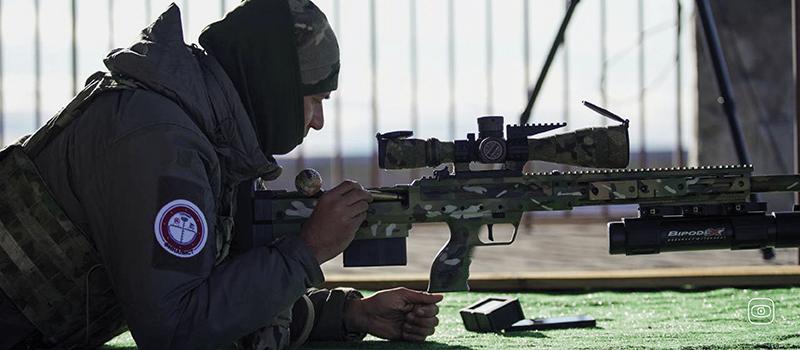
Publicly available data shows that Russian snipers are using Western rifles and especially Western ammunition on a large scale. This is most eloquently illustrated by a military sniper competition held in September 2024 in occupied Crimea: more than 70% of the participants used rifles manufactured in Austria, Finland, the UK and the US, and more than 90% used American ammunition.
Impact
Two months after publication, the investigation led to the arrest of members of a group involved in smuggling American and European weapons through Kyrgyzstan, carried out by US and Kyrgyz law enforcement agencies. One of The Insiders’s previous investigations had mentioned the Russian recipient of these weapons. In terms of sanctions control, the investigation increased political and reputational pressure on manufacturers and intermediaries, while also demonstrating the vulnerabilities of the sanctions architecture. However, key schemes operating through the EAEU countries and Turkey continue largely unabated, and the response of regulators remains selective.
The investigation has continued to generate tangible law enforcement outcomes. In March 2026, an Italian citizen pleaded guilty in federal court in Brooklyn to acting as an intermediary in an international network that supplied Russia with American-made firearms and ammunition. The individual was linked to Sergei Zharnovnikov, a Kyrgyz national arrested in the United States a year earlier in connection with the same scheme. According to court proceedings, two Italian companies associated with the defendant facilitated the procurement of weapons and ammunition, which were then routed through Kyrgyzstan before reaching Russia. This development further validates the investigation's findings on the role of intermediary actors and third-country transit routes in circumventing sanctions and export controls, while underscoring the transnational nature of these procurement networks.
Illustration: a Russian sniper armed with a US-made DesertTech .37XC rifle.
Source: Federation of Combat Sniping of Russia. Ministry of Defense of the Russian Federation.