In Spain, only 23,000 residential places were added between 2021 and 2025, while the over-65 population grew by 800,000. The pandemic exposed the cost of this gap, with over 43% of first-wave COVID-19 deaths occurring in nursing homes. In the UK, a decade of austerity has left social care with an estimated £8 billion annual funding gap, and 95% of care home beds are now run by the independent sector. In Italy, there are about 20 residential beds per 1,000 people over 65, less than half the OECD average, while an estimated 700,000 to 900,000 home care workers fill the gap.
This cross-border investigation examines the policy failures behind these strained systems. Drawing on data, freedom of information requests and testimonies from all three countries, it reveals how underfunding shifts the burden onto families and migrant care workers, deepening gender and social inequalities. It also looks at successful alternatives to the traditional nursing home model, from Spain to Italy, and asks who ultimately pays when public systems fall short.
Key findings
- Freedom of information requests and data analysis show that long waiting lists for public nursing homes in Spain and Italy make access especially difficult for less affluent families. These families are left to choose between costly private care and unpaid family care.
- In all three countries, the gap left by public services is filled mainly by women in the family and by migrant care workers, often in precarious conditions.
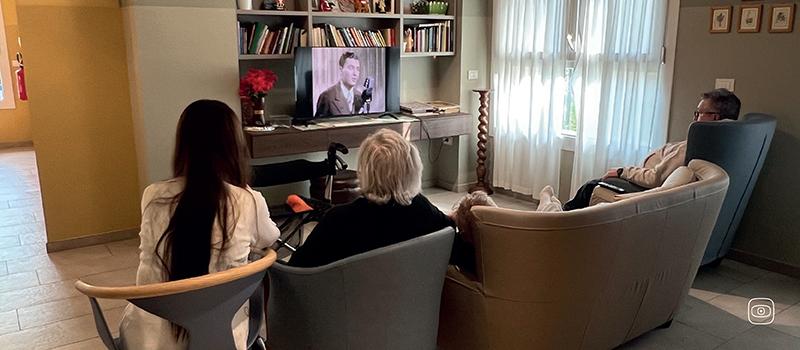
- Alternatives exist. Senior co-housing projects in Madrid show that an active, cooperative way of living in later life is possible. In Monza, Il Paese Ritrovato, a village designed for people with dementia, shows that care can preserve independence and everyday life.
Methodology
The team combined data analysis, expert interpretation and field reporting so that the numbers reflect real human experiences. We collected and cleaned data on residential care capacity and long-term care spending from national and international sources, including IMSERSO, NHS England, ISTAT, Eurostat and the OECD. We submitted freedom of information requests to obtain data on waiting lists and access to public facilities. In Spain and Italy, we visited public and private care facilities and interviewed residents, families, caregivers and staff. In the UK, interviews with providers, local authorities and researchers added a comparative perspective. One of the main challenges was comparing three very different national systems, as definitions, data formats and levels of detail vary widely. Consultations with experts helped us interpret the data consistently across countries. The resulting dataset is published openly on GitHub, so that other journalists and researchers can reproduce and reuse our work.