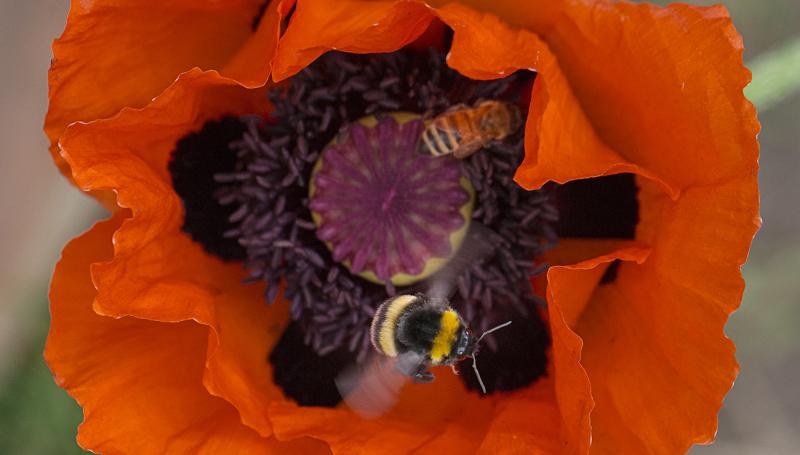
Research shows that pollinator populations, both wild and domesticated, are declining at a worrying rate across the continent. But our food supply depends on them. Scientists estimate that around one in every three mouthfuls of food we eat is dependent on insect pollination, particularly from bees.
This independent, cross-border investigation examines the impact of European agricultural policies on pollinators and the future of beekeeping in Europe through the experiences of beekeepers in Germany, France and Spain. Data from European institutions and national governments is also gathered to analyse the increasing use of insecticides in Europe and the accelerating homogenisation of agricultural land. Finally, it examines the emergency authorisations that are still being granted across Europe for insecticides or fungicides banned under EU law because they pose a real threat to pollinators. Experts interviewed for the study confirm the dramatic impact of these practices on biodiversity and pollinators in particular.
The investigation also examines the new agricultural policies currently being drafted by EU institutions and discussions on how to make agriculture more environmentally friendly. The scientists and NGO campaigners interviewed believe that the negotiations with EU member states do not reflect the environmental emergency and will not sufficiently promote organic farming or protect wildlife. Although the EU is introducing new laws, targets and frameworks to protect biodiversity, the scientists and campaigners said that its ambition is largely constrained by member states and lobbies, meaning these measures have little impact.
Photo credit: Antolin Avezuela