A year-long investigation traces a nickel supply chain from the forests of Sulawesi, Indonesia, through Chinese refineries and battery manufacturers, to Volkswagen electric vehicles sold across Europe. The reporting centres on the Cahaya and Hengjaya mining concessions, whose output feeds Huayou’s processing operations in Morowali, and examines documented commercial links connecting Huayou to CATL and CATL to Volkswagen.
The investigation combines field reporting with satellite analysis, corporate disclosures and trade records to assess the environmental and social consequences of mining expansion. It finds extensive forest loss linked to nickel extraction, including primary forest and areas of high biodiversity and carbon value. The investigation also documents the impact on the Tolaki Indigenous community, whose traditional livelihoods and collective farmland have been increasingly affected by mining, while a promised local smelter and its expected economic benefits failed to materialise.
At the downstream end, the investigation scrutinises Volkswagen’s claims that its supply chains are protected against deforestation and environmental harm. Volkswagen told reporters it could not rule out that the companies identified might be within its supply chain, but did not disclose specific sourcing arrangements. The investigation does not claim to have physically traced individual nickel molecules into specific battery cells; rather, it establishes a documented chain of commercial and supply relationships linking the mines to Volkswagen through Huayou and CATL. It also raises broader questions about corporate due diligence, supply-chain transparency and the environmental costs of the global transition to electric mobility.
Key findings
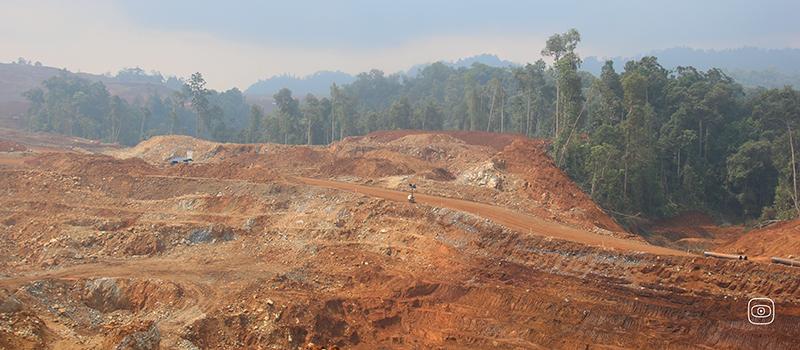
- Nickel mining linked to Volkswagen’s wider supply chain has caused extensive forest loss. TreeMap attributed approximately 1,490 hectares of forest loss within the Cahaya concession since 2001 to nickel mining; at Hengjaya, mining accounted for 772 hectares.
- The two concessions potentially linked to Volkswagen’s nickel supply chain lost nearly 2,360 hectares of canopy cover, according to the investigation’s analysis.
- The investigation found a documented supply-chain network linking Cahaya and Hengjaya to Volkswagen through Huayou and CATL. Volkswagen said it could not rule out that the identified companies were in its supply chain.
- In 2024, Cahaya delivered 11 million tonnes of limonite, almost all of its production, to Huayou’s Morowali smelter; deliveries rose to nearly 12.5 million tonnes in 2025.
- The investigation documented major environmental risks, including threats to primary forests, high-value carbon sinks and habitat for endangered anoa.
- The Tolaki community reports losing forests, traditional sources of income and farmland, while the local smelter and development benefits promised in connection with the mining project did not materialise.
- Volkswagen’s supply-chain controls have significant transparency gaps. The company said it uses satellite monitoring and audits but declined to disclose their results; existing smelter-focused audits do not necessarily establish whether upstream mines are free from deforestation.
- The investigation raises questions about the climate accounting of EV supply chains, because neither Volkswagen nor its certifier confirmed that emissions from mining-related forest loss were included in the relevant life-cycle assessment.
Methodology
The investigation used a mixed-method, cross-border reporting approach over the course of a year. Reporters conducted on-the-ground interviews and observations in Sulawesi, including with Tolaki community members, local officials, former company personnel, drivers and environmental experts. These findings were combined with satellite and geospatial analysis by specialist organisations, including TreeMap, as well as forest and biodiversity data. The supply chain was reconstructed through corporate annual reports, regulatory filings, shareholder disclosures, official company documents and import-export and shipping records covering principally 2024 and 2025. Reporters cross-checked commercial relationships at successive stages: mining in Cahaya and Hengjaya; processing by Huayou in Indonesia; refining and cathode production in China; battery production by CATL; and deliveries and battery-pack assembly involving Volkswagen. The investigation explicitly distinguishes between documented supply-chain links and physical traceability: no material evidence conclusively proves that nickel from these two mines was incorporated into a specific CATL battery cell shipped to Volkswagen. Companies and relevant authorities were approached for comment, and their responses or refusals to provide details were incorporated into the reporting.