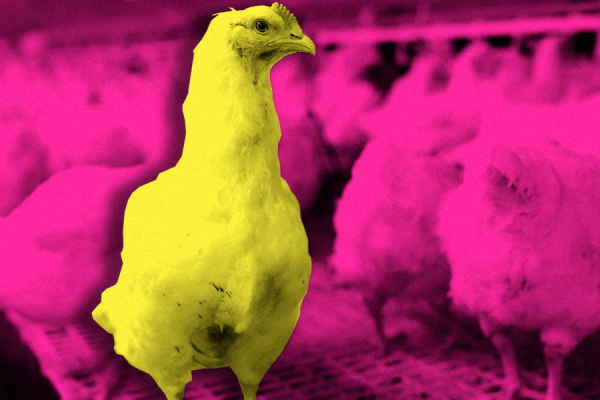
Pig farming in Romania and Hungary is becoming increasingly intensive and centralized, with hundreds of thousands of tons of pork produced annually and the largest companies operating under environmental permits that present the sector as strictly regulated and properly monitored. On paper, the farms we investigated almost never exceeded pollution indicators for air, water or soil. In the villages
around them, however, residents repeatedly complained about heavy odours, manure spreading and we found a recurring sense of discontent with the activities of industrial pig farms.
We reviewed hundreds of documents, interviewed experts and authorities, and visited pig farms and the main slaughterhouse in Western Romania. We found that several groundwater bodies beneath or near pig farming areas are affected by nitrate pollution. We also uncovered a monitoring system that relies heavily on self-monitoring: farms collect their own environmental test samples, contract the laboratory for analyses, and authorities mainly check the paperwork. The result is a bureaucratic chain that transforms a contested reality into perfect paperwork.
Key findings:
- Several groundwater bodies beneath pig farming areas in both Romania and Hungary are polluted, spanning at least two counties in Romania and confirmed by Romanian Waters Authority reports naming specific companies, including a Chinese-owned local firm and Smithfield, as potential polluters of three groundwater bodies.
- The area of groundwater bodies linked to Smithfield's agricultural and livestock activities covers 14,625 square kilometres — roughly twice the size of Timiș county.
- Both countries rely on a self-monitoring system: farms collect their own wastewater and manure samples, pay and contract the laboratories that analyse them, and state authorities largely review only the paperwork submitted by the farms themselves, without independent verification.
- In Hungary, the national authority issued only one fine — 700 euros — in the past five years, for a farm operating outside the terms of its integrated environmental permit.
- A soil expert (Alina Bădilă, Association of Soil Experts) states that nothing in current certification regulation prevents farms from requesting analyses tailored to produce favourable results, since no independent body verifies sampling integrity.
- Residents near industrial farms and the Utvin slaughterhouse (Comtim/WH Group, near Timișoara) report persistent odours and a fish die-off in the Bega river, which authorities attributed to natural causes (heat and oxygen depletion) rather than discharges, despite a roughly 30 cm pipe discharging brown water into the river from behind the slaughterhouse.
Methodology:
The investigation combined document review, official data requests, field reporting and expert consultation across Romania and Hungary.
The team analysed hundreds of documents, including environmental permits, self-monitoring reports submitted by pig farms, and official reports from Romania's National Administration "Apele Române" (Romanian Waters Authority), which monitors surface and groundwater quality and names specific companies as potential polluters of groundwater bodies.
Formal information requests were filed with Romania's National Environmental Guard and National Agency for Environmental Protection and Protected Areas, as well as with Hungarian authorities including the Csongrád-Csanád County Government Office, covering sanctions, fines, permits and environmental incidents over the past decade. Field visits included ten industrial pig farms and the main slaughterhouse in Western Romania (Timiș and Arad counties), as well as an industrial farm near Szeged, Hungary.
The team interviewed experts, authorities, industry representatives, local NGOs, and residents, including a soil expert from the Association of Soil Experts (part of the OSPA network of Pedological and Agrochemical Study Offices), who raised concerns about the independence of farm-commissioned soil and water analyses. Cross-border coordination between the Romanian (Context) and Hungarian (Átlátszó) reporters was maintained through weekly meetings throughout the project.