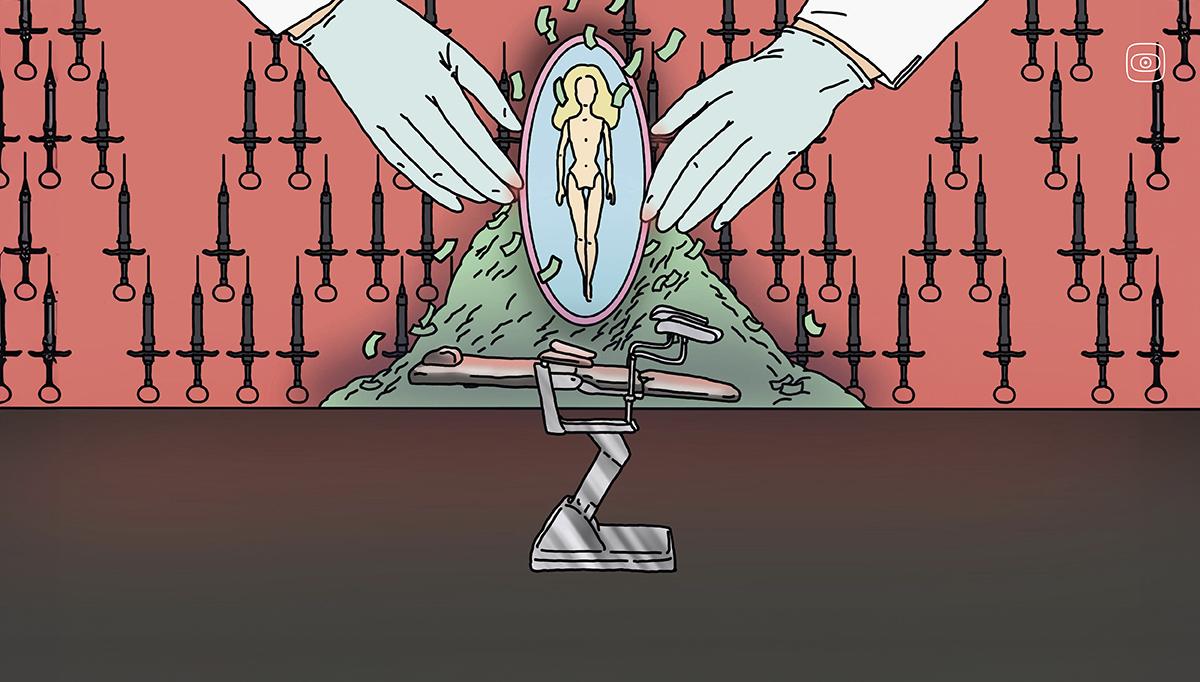
The Cutting into the Dark investigation by Anna Pamula and Luiza Vasiliu exposed the rapidly expanding aesthetic gynaecology industry in Romania and Poland, revealing a sector marketed under the language of empowerment and "intimate wellness" but operating largely without robust scientific evidence, effective regulatory oversight, or adequate patient protections. Using undercover reporting, interviews with dozens of patients, analysis of medical records, audits of online advertising, and consultations with international experts, journalists documented how clinics promoted unproven procedures through aggressive marketing that exploited women's insecurities while minimising risks and overstating benefits.
The investigation uncovered high-volume practices performing intimate surgeries and non-surgical interventions despite limited evidence of effectiveness, with patients reporting long-term pain, loss of sexual sensation, psychological trauma, and frequent revision surgeries. It also highlighted systemic failures, including barriers to accessing medical records, misleading online advertising, experimental procedures performed in public hospitals, and conflicts of interest within regulatory structures. Together, these findings demonstrated a broader European trend: the commercialisation of intimate procedures is advancing faster than the safeguards designed to protect patients.
The investigation generated significant public and institutional responses in both countries.
In Romania, the reporting sparked a nationwide debate about the ethics and evidence base of aesthetic gynaecology. Representatives of the Romanian College of Physicians publicly acknowledged that these procedures are relatively new and require much broader scientific study, while emphasising that medicine driven primarily by commercial interests rather than patient welfare should be sanctioned. The President of the Romanian Society of Obstetrics and Gynecology publicly distanced herself from the Romanian Society of Gynecological Aesthetics after discovering that her name and image had been used to promote these procedures. Although the Ministry of Health maintained that existing practices were legal and unproblematic, the investigation brought renewed scrutiny to potential conflicts of interest within advisory structures overseeing the sector.
The reporting also encountered resistance, with legal threats issued by both a physician featured in the investigation and a private clinic involved in promoting unproven procedures. Neither pursued further action after receiving responses from the journalists. At the same time, the investigation achieved substantial public reach, becoming a widely referenced resource across social media platforms and online discussions about these treatments. The Romanian publication alone generated more than 61,000 website views, while related social media content reached hundreds of thousands of users. The investigation's significance was further recognised internationally through its republication by the UK-based Translator Magazine.
In Poland, the investigation prompted concrete regulatory commitments. For the first time, the Polish Society of Gynecologists and Obstetricians (PTGiP), together with the National Consultant in Obstetrics and Gynecology, formally stated that procedures such as hymenoplasty, "vaginal revitalisation," G-shot, and O-shot performed without medical indication should not be considered standard gynaecological practice or treatment. National leaders committed to developing official guidance aligned with international standards established by FIGO, ACOG, and RCOG, alongside creating national standards for informed consent and patient qualification and establishing a registry to monitor complications—mechanisms that had previously been absent.
The series also encouraged women to share their own experiences and concerns, while clinicians reported noticeable changes in discussions around informed consent following publication. The investigation reached broad audiences through open-access reporting, social media campaigns that generated nearly 300,000 views, and coverage by Polish public television. Follow-up reporting continues to monitor whether professional bodies fulfil their commitments and to further investigate the safety of medical devices and practitioners operating within this largely unregulated field.
By combining rigorous investigative methods with sustained public engagement, the project transformed a largely invisible issue into a matter of professional, regulatory, and public concern. It challenged the normalisation of poorly evidenced intimate procedures and created pressure for greater transparency, accountability, and patient protection in an industry where commercial interests have too often outpaced scientific evidence and ethical oversight.