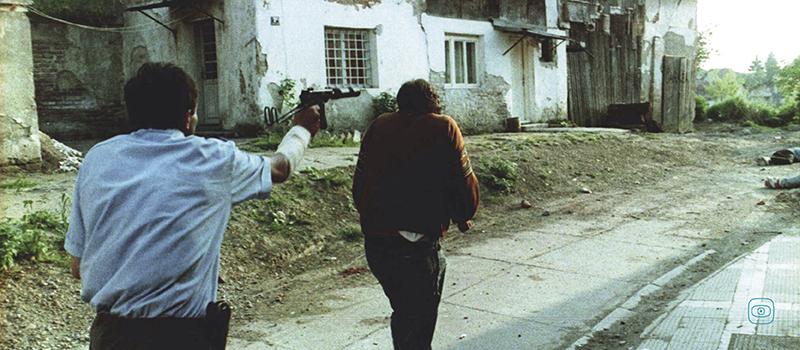
The image in question shows Serb paramilitary Goran Jelisić executing Bosniak civilian Husein Kršo in Brčko in May 1992. Stojanović's photograph was bought and distributed by Reuters, then honoured by WPP a year later. It remains the only professional photograph known to capture the moment of an execution during the wars in the former Yugoslavia.
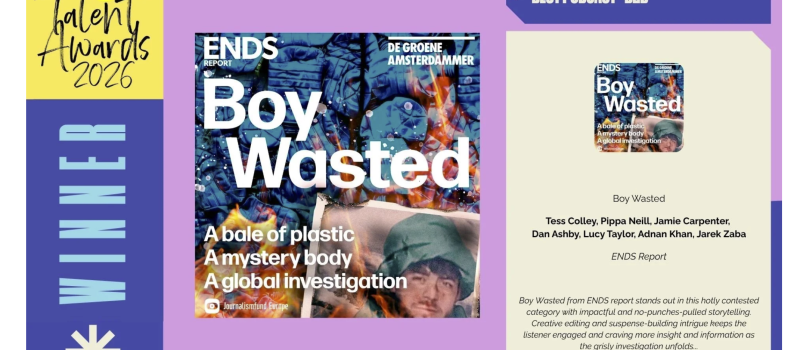
That fact is precisely what drove journalist Barbara Matejčić to spend three years reconstructing how the picture came to exist. Her investigation, "Killing for a Photo Opportunity", was supported by Journalismfund Europe and went on to win the European Press Prize. It traced the photograph back through ICTY trial transcripts, interviews with the photographer and his colleague, Reuters editors, the WPP jury, and Jelisić himself, then serving a 40-year sentence.
What she found reopens a question the Hague tribunal itself raised but never resolved: how does a killer allow himself to be photographed, in close range, across an entire roll of film? Jelisić told ICTY investigators in 1998 that the killing had been arranged in advance by local police and military officials specifically so that two photographers could stage propaganda images of "Serbian victims." Matejčić corroborated this with multiple sources, including war photographers who found the framing and proximity of the shots impossible to explain as chance reportage.
The caption itself was also false. For nearly three decades, WPP's website described the victim as a "Muslim sniper" captured after firing on a Serbian refugee convoy. Husein Kršo was a Brčko waiter with no ties to any army. After Matejčić presented WPP with footage of Stojanović privately admitting the man was a civilian, the foundation corrected the caption in 2022, but declined to examine the deeper allegations about how the photograph was taken.
That refusal is now the crux of the dispute. In April 2026, the Independent Journalists' Association of Serbia and the BH Journalists' Association formally asked WPP to revoke the award. On 3 June, WPP declined, stating that no "verifiable evidence" had emerged to justify revocation. Sixteen days later, the General Assembly of the European Federation of Journalists — representing more than 300,000 journalists across 44 countries, adopted a resolution backing revocation, and the SafeJournalists Network launched the public petition.
The petition argues that WPP's own 2015 Contest Code of Ethics is being applied selectively. It cites potential breaches of at least five articles, covering dignity of subjects, accurate captioning, transparency about how images are made, and prohibitions on accepting favours from those seeking to influence a story. WPP has revoked awards twice before on ethics grounds: Giovanni Troilo in 2015 for misleading captions, and Stepan Rudik in 2010 for digital manipulation. The petition's signatories argue the Stojanović case meets, and arguably exceeds, that threshold.
Beyond the institutional question, the petition presses for something more direct: formal acknowledgment to the Kršo family, who only learned of Husein's fate when his eldest son recognised his father's jacket on television in 1993, and who have watched the mischaracterised image circulate for over 30 years.
For a wire-service photograph judged and awarded in seconds during a first-round selection process, as former WPP jury chair Stephen Mayes has acknowledged, the case tests whether photojournalism's leading institution will revisit its own history when confronted with evidence years after the fact — and whether recognition, once granted, can survive a fuller account of how an image was made.
The petition can be signed here.
The full text of the petition is available here.