Deltas - delicate ecosystems that have long coexisted with human activity - are increasingly threatened by large-scale agriculture. The overuse of phosphorus- and nitrate-rich fertilizers in monocultures such as rice, maize, wheat, and forage crops leads to nutrient accumulation at river mouths.
This is evident in both the Ebro Delta in Catalonia (Spain) and the Po River Delta (Italy), where fertiliser runoff from the Ebro and Po river basins drains into the Mediterranean, fuelling harmful algal blooms. These outbreaks deplete oxygen, suffocating marine life and coating coastal areas with masses of green seaweed.
While fertilizers make agricultural fields lush and productive, they turn these complex and vital ecosystems into barren, oxygen-poor zones. This phenomenon, known as eutrophication, has been documented and studied since the 1980s. Despite the existence of EU and national regulations, the rising temperatures of the Mediterranean are intensifying this process, once again threatening local economic sectors that depend on clean waters, such as aquaculture and bivalve production.
This story emerged from several weeks of research during a hot summer across the Ebro and Po River deltas, where our team investigated the socio-ecological consequences of industrial agriculture. We combined desk-based research with field interviews, speaking with local communities, environmental scientists, and small-scale aquaculture producers whose livelihoods are increasingly affected by eutrophication. Archival material and scientific literature helped us trace how fertiliser-intensive monocultures have reshaped these landscapes since the 1980s.
One of the main challenges was accessing up-to-date environmental data, often fragmented across regional authorities and research institutes. Another obstacle was the reluctance of some agricultural actors to discuss fertiliser use, given the political sensitivity surrounding EU regulations and water-quality monitoring.
Despite these difficulties, the fieldwork enabled us to document the lived effects of pollution and rising Mediterranean temperatures on communities that depend on fragile coastal ecosystems. The story seeks to connect scientific evidence with local testimonies, showing how ecological degradation is experienced on the ground.
Key Findings
- Eutrophication first emerged as a major phenomenon in the 1980s, causing the collapse of traditional fishing sectors. Subsequent local and EU regulations have not fully halted the problem, which continues to threaten local communities.
- Rising temperatures in the Mediterranean are triggering renewed episodes of anoxia, putting aquaculture—an industry that developed after the 1980s—at risk and once again putting local livelihoods in crisis.
- A lack of coordination between agro-industrial actors and fishing communities amplifies the risks faced by delta populations.
- Some ecologically sustainable solutions are being tested in the Ebro Delta; however, in the Po River Delta, safeguarding the ecosystem remains more complex due to larger industrial pressures and environmental challenges.
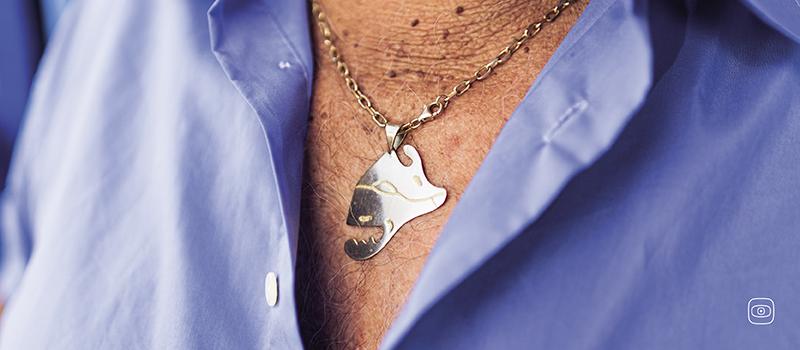
Image by Daniela Sala. Gulf of Alfacs, Ebro Delta, Spain. Bartomeu Ardit, known as “Avi Augusti” (85), wears a custom-made medallion representing the Ebro Delta: “I carry it on my heart,” he says.