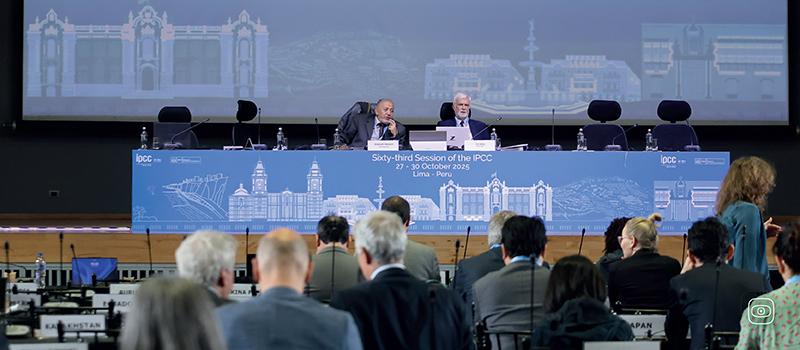
The IPCC is the world’s most authoritative international body on climate science. Its reports underpin UN climate negotiations and inform national climate policy around the world. Yet, its conflict of interest policy is described by experts as failing.
This investigation reveals the growing presence of Saudi Arabia, the world's second-largest oil producer, within the IPCC, and present more than 20 cases with significant conflict-of-interest concerns from among the authors selected for their upcoming 7th Assessment Report.
Having done background checks for over 200 IPCC authors, the team identified major problems with both the design and application of the organization’s conflict of interest policy, an analysis backed by experts and former IPCC authors.
Key findings
- At least a dozen IPCC lead authors are employed or linked to Saudi Aramco, Saudi institutions and other oil and gas interests. An IPCC vice-chair is also employed by the Saudi energy ministry.
- The IPCC’s conflict of interest policy is described by experts as failing and this investigation has found discrepancies between what the policy says and the findings on the background checks of about 20 authors of the upcoming 7th Assessment Report.
Methodology
The investigation is based on background checks of 223 authors of the IPCC’s Working Group III for the upcoming 7th Assessment Report. After a thorough search of the authors’ profiles, the team presented its findings to two independent reviewers, as well as to former IPCC authors and experts in several relevant fields. The conflicts of interest were grouped according to their nature and the team has put the list through several rounds of verification until they achieved the final number.