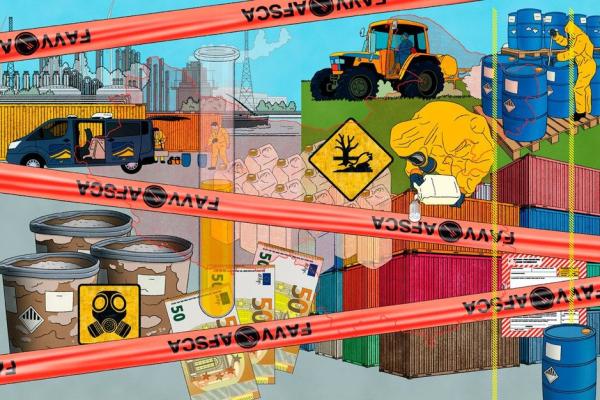

Materials officially classified as reusable goods or production scraps are shipped to Africa, allowing European companies to cut disposal costs while transferring environmental and health risks to countries with weaker regulatory frameworks.
Morocco has emerged as a key destination for these flows. Since 2016, more than 2.5 million tonnes of European waste have entered the country, the values are often declared incompatible with genuine reuse. This points to a widespread practice of disguised waste disposal rather than legitimate second-hand trade.
The system is sustained by regulatory loopholes that blur the line between waste and merchandise. By using customs codes for “scraps” or used goods, exporters bypass stricter environmental controls and enable the circulation of non-recyclable and hazardous materials.
Through on-the-ground testimonies, the journalists documented the scope of the consequences. In some areas of Casablanca, air pollution exceeds World Health Organization limits by more than six times, groundwater contamination is severe, and hundreds of people survive by scavenging European waste under dangerous conditions.
Environmental damage is further underestimated. Satellite-based research indicates that methane emissions from landfills are often at least double the official figures, with major Moroccan sites among the most critical. Despite public opposition and EU plans to ban waste exports to non-OECD countries by 2026, shipments to Morocco continue to increase, exposing the gap between circular economy rhetoric and reality.
Key findings
- Air pollution in Mediouna: Pollution levels are more than six times higher than the World Health Organization’s recommended limit, affecting about 14,000 residents.
- Groundwater contamination: Cadmium was recorded at roughly 33,000 times the WHO safety guideline, while nitrate levels were more than five times above the limit.
- Emissions: A 2025 Nature satellite study found virtually no correlation between the reported emissions and satellite-based methane emission estimates (r = 0.03), with Casablanca’s landfill specifically identified.
- Economics of dumping: Treating waste properly in Europe costs about €100 per ton, compared to around €36 in Morocco, same material, but cheaper paperwork and weaker protections.
- Regulatory rush: With the EU’s full ban set for late 2026, Morocco formally asked in early 2025 to stay on Europe’s approved destination list, and the pace of waste shipments has intensified.
- Special trade records reveal that 93% of waste shipped to Morocco is classified as reusable clothing, but declared values as low as €0.10/kg indicate that it is either in unusable condition and/or there is no demand for it.