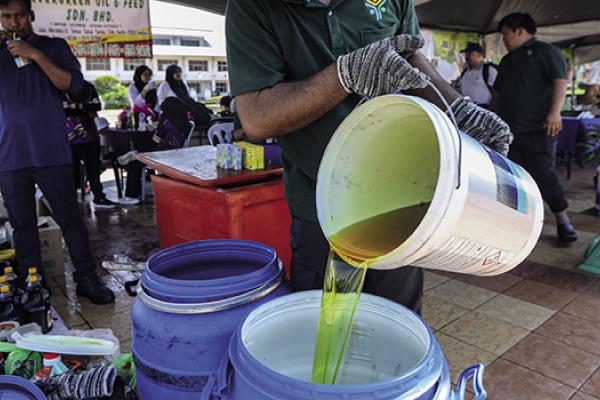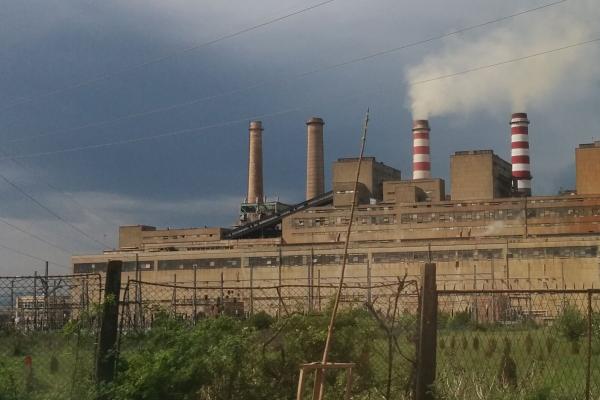

The project traced the origin of DGD’s feedstocks back to FASA, a Darling company based in Brazil, and discovered that beef tallow feedstocks were linked to deforestation in the Brazilian Amazon.
Animal fats and oils originating from cattle raised on deforested land in the Amazon can end up being used as a sustainable “green fuel” in European engines. However, the certification mechanisms that are supposed to verify environmental compliance do not account for the entire supply chain. For example, the feedstock could be purchased as waste from a slaughterhouse in Brazil, processed there, transformed in a US refinery and then shipped across the ocean.
The team's investigation traced the production line back to the import of renewable diesel and sustainable aviation fuel (SAF) under the name Valero to markets in the European Union and the UK. This was part of government-sponsored schemes aimed at reducing emissions.
The story highlights the limitations of certification mechanisms such as the International Sustainability and Carbon Certification (ISCC) when it comes to verifying the environmental compliance of fuels crucial to achieving the carbon reduction targets set by the European Union and the UK. Some of these 'green' fuels, produced at US plants and holding ISCC approval, are eligible for use under the EU's ReFuelEU and Renewable Energy Directive frameworks, as well as the UK's Sustainable Aviation Fuel (SAF) Mandate. These are schemes designed to accelerate the decarbonisation of the civil transportation and aviation sectors.
Key findings
- Diamond Green Diesel is a US company that exports green fuels made from animal fats originating from cattle raised on illegally deforested land in Brazil to the UK and the EU.
- Although Diamond Green Diesel’s plants hold ISCC certification and are eligible under the EU’s ReFuelEU and Renewable Energy Directives, as well as the UK’s SAF Mandate framework, the certification does not track the exact origin of animal feedstocks.
- The investigation shows that fuels can be labelled as “sustainable” and enter the European and UK markets, despite there being uncertainty over the origin of their feedstocks.