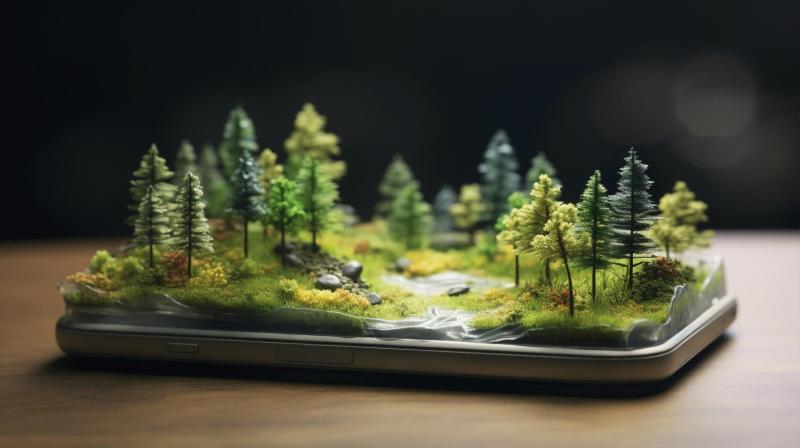
Eight environmental reporters were set to attend a three-day workshop, where they learned how to transform complex data into visual content using a combination of digital tools and physical materials. The training taught journalists how to create videos for social media platforms such as TikTok and Instagram to help environmental stories reach younger audiences. Each participant created two visualisation projects: one during the workshop and one independently with online support from trainers.
The project was launched with a strong preparatory phase focused on coordination, research, and capacity building. Following an initial team meeting to align objectives and workflows, the team conducted extensive desk research on visual storytelling in environmental journalism in Serbia and across Europe. This included analysing best practices, international case studies, and current trends in environmental data visualisation. Parallel to this, structured environmental datasets were developed and tested for compatibility with visualisation tools such as Flourish. The foundations of the e-manual/handbook and the training programme were established, alongside preparations for filming that incorporated sustainable and recycled materials where possible.
During the research and recruitment phase, the team refined the handbook structure and identified key digital tools for journalistic storytelling. Four tools—Datawrapper, Flourish, Tableau, and StoryMaps—were selected, with Datawrapper and Flourish chosen as the primary training tools due to their accessibility and professional output. A public call attracted 24 journalists from Serbia and Bosnia and Herzegovina, most of whom had no prior experience in data visualisation, highlighting a clear need for targeted training. Participants were selected based on professional relevance and motivation, with priority given to those reporting on environmental and climate-related issues.
The three-day training programme combined theoretical input with hands-on production work, enabling participants to develop practical skills in data visualisation, video storytelling, and audiovisual production. Working with real datasets and local environmental topics, participants created digital visualisations and short videos using different filming approaches. Continuous mentoring supported skill development across scripting, filming, sound recording, voice-over work, and editing. After the training, each participant completed an independent video assignment as a final requirement for receiving the scholarship.
In the final stage, the project’s knowledge and practical experience were consolidated into the handbook Priručnik za vizualizaciju – Kako podatke o okolini i klimi učiniti zanimljivijim: od scenarija do postprodukcije (Novi Sad, December 2025). Structured as a practical learning tool, the handbook covers storytelling and scenario development, digital and spatial data visualisation techniques, and replicable workshop examples, ensuring long-term impact and usability for journalists working on environmental and climate topics.
Trainers:
- Stefan Janjić
- Milovan Nikolić
- Ivan Subotić
- Tijana Bumbić
- Darija Stjepić
- Teodora Koledin
- Elena Prnjić
- Mihajlo Mršić