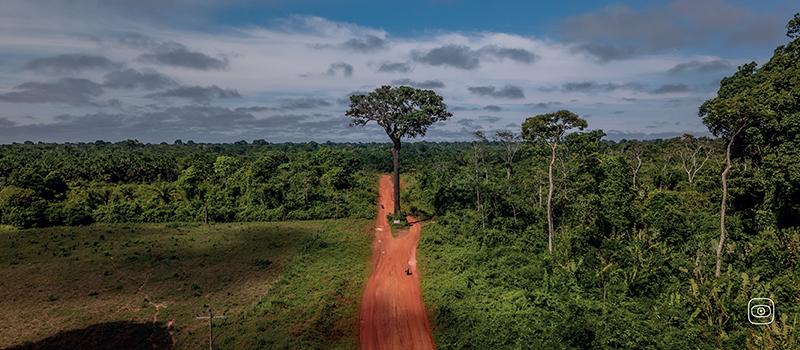
In the heart of the Amazon rainforest in Bolivia – Riberalta, the ‘pearl of the Bolivian Amazon’, and home to more than 30 indigenous communities, – Indigenous leaders are currently fighting to defend their territories and natural resources from European and global green policy measures, promoted as a solution to climate change. The EU has recently allowed for carbon credits to make up part of its emissions targets for 2050, accelerating already growing demand for credit, mostly generated in the Global South. In Bolivia, the EU has facilitated the opening of a new market for credits, mainly from forest protection programmes in the Amazon. But one such project, led by a Bolivian politician whose foundation planned to sell credits, was torn up after affected indigenous groups claimed they had been misled and exploited. Through this project, which indigenous leaders compared to a return to colonial land expropriation, we can see how European interest in carbon credits creates incentives for state and private actors to undermine or roll back the hard-won customary rights of frontline indigenous communities in the Amazon.
Key findings
- Europe’s target of climate neutrality by 2050 and its role in opening up Bolivia to carbon credits.
- The carbon credit strategy in European policy: a break for polluters.
- The European Global Gateway strategy and the substantial funds earmarked for Bolivia, which the EU has only disclosed via FOI.
- The carbon credit agreement that the Multiethnic Indigenous Territory II, known as TIM II, rejects: 88 per cent of the area’s 407,585 hectares is at risk of being controlled by a private foundation for 30 years.
- In the name of carbon credits, free, prior and informed consent - indigenous of TIM II denounce - has been violated (ILO Convention No. 169).
- Carbon credits represent a continuation of the colonial approach: a statement by Survival International.
- From the production of Brazil nuts to carbon credits: a member of the Bolivian national parliament - of Swiss origin and with companies across Europe - proposes legislation on carbon credits whilst simultaneously investing in the sector.
- Europe in Bolivia: the role of Team Europe (Germany, Sweden, France, Italy and Spain).
- The false promise that violates the rights of indigenous peoples: a warning from the Solón Foundation.
- The illusion of change to maintain the status quo: the view of the Green Finance Observatory.
- Global polluting companies are targeting Bolivia to generate large quantities of carbon credits and continue emitting greenhouse gases: the view of the Bolivian Centre for Legal and Social Studies (CEJIS).
Methodology
The investigation was carried out by four journalists and a photojournalist: two team members in Bolivia and three in Europe. Alongside our fieldwork in the Bolivian Amazon amongst the indigenous communities affected by the carbon credit deal, we carried out research into documents, first-hand accounts, interviews, data analysis, formal requests for data via FOIA, financial investigations, the examination of reports and the analysis of company databases. We divided the areas of investigation amongst the team members, making the most of our multilingual skills and our presence in different countries, and benefited from the support of our mentor, Lionell Faull, for fact-checking, corporate research and information management.