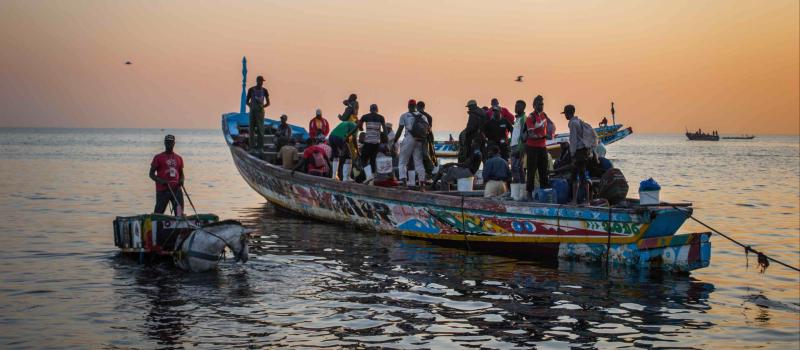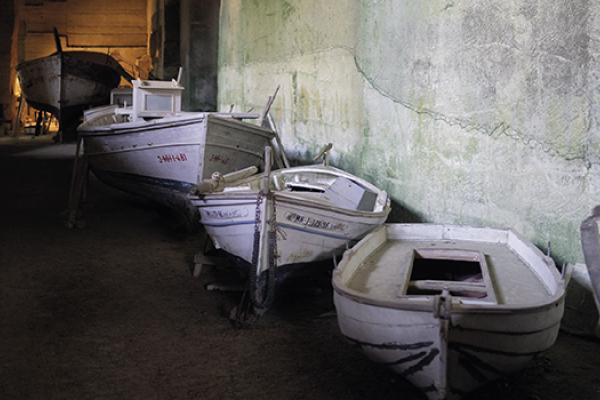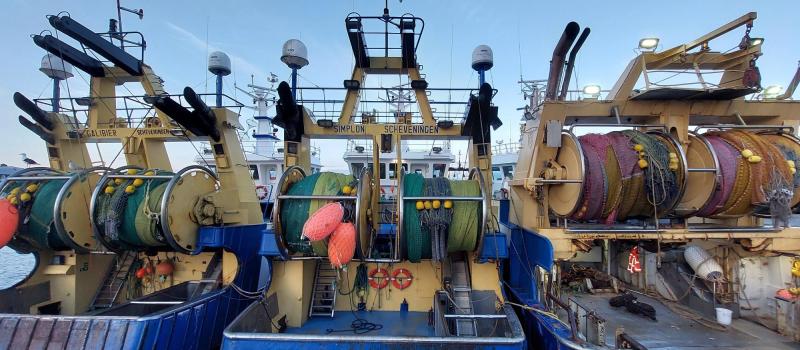

In Spain, one of the EU’s largest fishing nations, most trawlers are running on engines that are far more powerful than their licences allow. This is an open secret within the industry.
These vessels are officially capped to limit overfishing and protect fragile marine ecosystems, but they often hide engines that are two or even three times stronger than their authorised power. The result is faster trips, heavier nets, and depleted fish stocks.
In ports such as Palamós inCatalonia, a few fishermen have opted for a different path, voluntarily downsizing their engines to comply with sustainability goals - albeit at a significantfinancial and bureaucratic expense. Meanwhile, regulators are struggling to enforce the rules due to weak inspection systems and the complicity of engine certifiers.
However, this problem is not unique to Spain. From the North Sea to the Mediterranean, inflated engine power is undermining the EU’s Common Fisheries Policy and threatening the biodiversity and fairness of a sector that is already under strain. Brussels has now promised tougher controls: by 2028, 'high-risk' trawlers will be subject to real-time monitoring of engine output. Whether this will be enough to rein in decades of abuse and give Europe’s seas a chance to recover remains to be seen.
The team reported from several Spanish ports in Galicia and Catalonia. They interviewed fishermen who admitted to using engines that were more powerful than those registered on their licences. The journalists also examined the impact of this on their catches and on competition within the sector. They questioned Spanish authorities, engine manufacturers and certification bodies about the extent of the problem and the apparent lack of effective oversight. In Brussels, we spoke with EU fisheries inspectors, experts, and officials to explore how widespread engine fraud has become across the EU. The investigation revealed a systemic issue that challenges the success of European sustainability policies.
Key findings:
- The majority of bottom trawlers of the European fishing fleet operate on engines with much higher power than allowed.
- Fishermen themselves acknowledge this practice and describe a “race” to the fishing grounds that began around the 1980s: faster, more powerful boats arrived first, deployed larger nets, reached deeper or more remote areas, increasing their catch.
- It is an open secret within the industry and authorities are also well aware. Still, there is no official account of infractions regarding this fraud, even though using a more powerful engine than authorised is formally a serious infringement.
- Verification is difficult because official registries only show certified power, while actual power may differ and is hard to detect.
- Problems in the certification process include manipulation of documentation by distributors/manufacturers, seal tampering after certification, etc. Certifiers claim to be complying with national legislation in the countries where they do business. Engine manufacturers point at ship owners as responsible for what they do with their engines at sea.
- In 2022, the Spanish government increased the maximum authorised power for Mediterranean trawl vessels to 665 kW (≈ 904 hp). Critics argue that this goes in the opposite direction of reducing fishing effort and reversing over-exploitation.
- Engine power fraud is widespread across Europe; audits found false certifications and lax enforcement in countries like Spain, the Netherlands, Ireland, and Denmark.
- Tighter EU rules are coming: From 2028, high-risk trawlers will face stricter monitoring, including on-board power-control system
- There are local exceptions: In the port of Palamós (Girona) voluntarily limit engine power under local sustainability plans, but such cases are rare.
Image by Paroma Bassu: Fishermen Josep Antoni Cruz and Carles Cruz on their trawler, Nova Meda.