The team's cross-border investigation examines how a threat identified by scientists years ago developed into a major epidemic – and why institutions failed to respond effectively while there was still time to contain it.
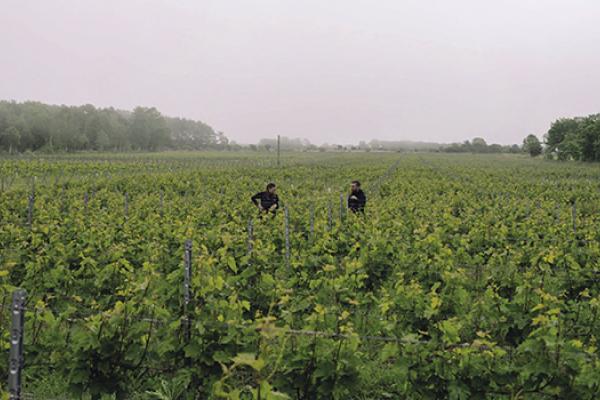
The team investigates what authorities in Hungary, Austria, and Romania knew about the disease, when they knew it, and what measures they took – or failed to take. The reporting looks at the capacity of authorities to monitor and contain the outbreak, gaps in surveillance and laboratory testing, the role of neglected and abandoned vineyards, and the incentives that may discourage growers from reporting infections.
The investigation also explores how climate change is contributing to the spread of the insect that transmits the disease, and how different approaches among winegrowers – from conventional chemical treatment to organic and more holistic practices – shape the response.
By comparing three countries at different stages of the epidemic, the project aims to identify the institutional and practical failures that allowed the crisis to escalate, as well as lessons that could help Romania and other countries prepare before the disease becomes even more widespread.
Methodology
The investigation combines cross-border investigative reporting, Freedom of Information requests, documentary research, scientific interviews and field reporting. The teams in Hungary, Austria and Romania are examining official records, surveillance and inspection data, legislation, institutional correspondence and government decisions, while interviewing scientists, winegrowers, industry representatives, officials and other relevant sources.
The three-country comparison is central to the methodology: rather than examining the outbreak in isolation, the team traces what authorities knew and did over time and compares institutional capacity, enforcement, reporting mechanisms and responses across countries at different stages of the epidemic.
Field reporting and audiovisual interviews are used to document the experiences of affected winegrowers and connect the institutional findings to the human and economic consequences of the disease.