Manganese is common in the Earth’s crust and essential in small amounts to human health. But it is also critical to the production of steel, including the steel used in wind turbines, and increasingly important in batteries for electric vehicles, particularly newer-generation technologies. The EU included manganese in its 2024 Critical Raw Materials Act, a list of materials vital to the bloc’s green transition.
South Africa accounts for about a third of global manganese production and holds roughly 70 percent of known reserves. Much of this mineral wealth lies beneath the sands of the Kalahari basin, a vast, arid region straddling South Africa, Namibia and Botswana. More than a quarter of Europe’s direct manganese supply comes from there, and the share is likely higher when indirect imports of processed material are taken into account.
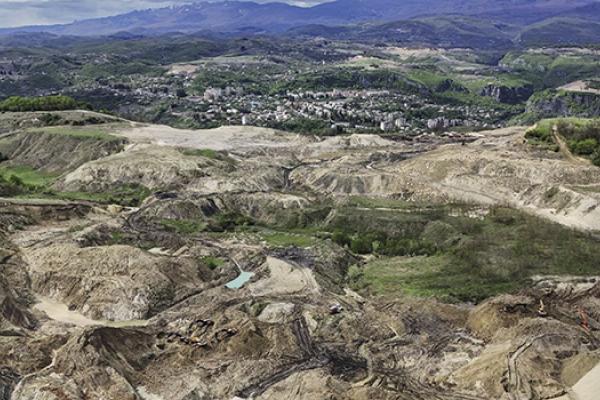
But in the Kalahari, extracting the mineral carries heavy environmental and social costs. What residents describe as a once-pristine landscape of mustard-coloured sand expanses dotted with ancient camel thorn woodlands is now scarred by open-cast craters, tailings dumps and abandoned mine sites. Lines of thundering trucks throw up plumes of toxic dust, and from time-to-time explosive blasts reverberate in the background, followed by puffs of smoke.
Farmers and ranchers say mining is depleting and contaminating underground water sources they depend on. Black communities whose forebears were forcibly resettled almost a century ago say mining companies regularly promise paved roads, youth jobs, street lighting, school facilities and food aid, only to break their word. Residents complain of heavy dust pollution, damaged homes, sick livestock and little lasting benefit from the mineral wealth extracted around them.
“This country is rich because of mines, but we are in a ghetto. All of us stay poor and suffer in a rich land,” one resident said.
Key findings
- Farmers, residents and hydrological reports point to aquifer depletion linked to mine dewatering, as well as contamination by nitrates and other pollutants. Experts warn that in some areas groundwater systems could take more than a century to recover after mine closure.
- Villagers around Hotazel report cracked homes from blasting, dust-covered gardens, sick or dying livestock, broken promises from mining companies and limited access to jobs. Several communities trace today’s grievances to older histories of forced resettlement and dispossession.
- South Africa’s mining laws are formally progressive, but officials, activists and experts describe under-resourced oversight, “window-dressing compliance” and poor attention to cumulative impacts. Smaller mines are seen as especially problematic, while rehabilitation of damaged land remains patchy.
Photo by Madelene Cronjé