Europe has made nature restoration a political priority. But how much does it actually cost to lose an ecosystem? And who ultimately pays the price when restoration comes too late?
Restoration at a Price is a cross-border investigation into two Mediterranean salt marshes that explores a question environmental journalism rarely addresses: can restoring nature be more cost-effective than paying for the consequences of environmental degradation?
Developed by FACTA (Italy) and the Center for Investigative Journalism of Montenegro (CIN-CG), with scientific support from environmental economists Francesco Silvestri and Vincenzo Barone (Eco & Eco), the investigation combines investigative reporting, satellite imagery and environmental economics to examine how biodiversity loss, climate change and governance failures translate into measurable ecological and economic costs.
The investigation focuses on two emblematic case studies.
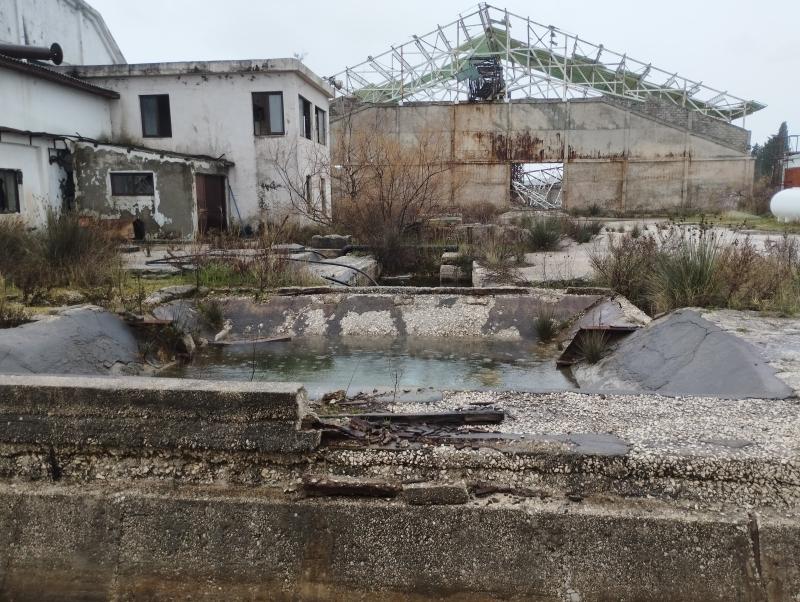
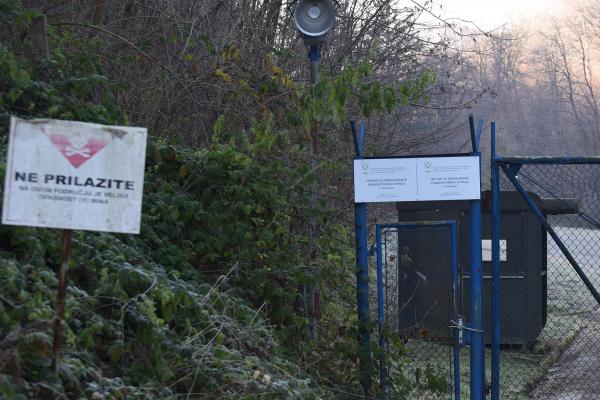
In Ulcinj (Montenegro), we investigate how a flawed privatisation, years of institutional neglect and unresolved legal disputes transformed the eastern Adriatic's largest salt marsh from a productive landscape into a degraded ecosystem. Through satellite analysis, field reporting and interviews, we document the collapse of the hydraulic system that once sustained one of the Adriatic Flyway's most important stopover sites for migratory birds, while examining how governance failures have delayed restoration despite the site's strategic importance for biodiversity conservation and Montenegro's EU accession process.
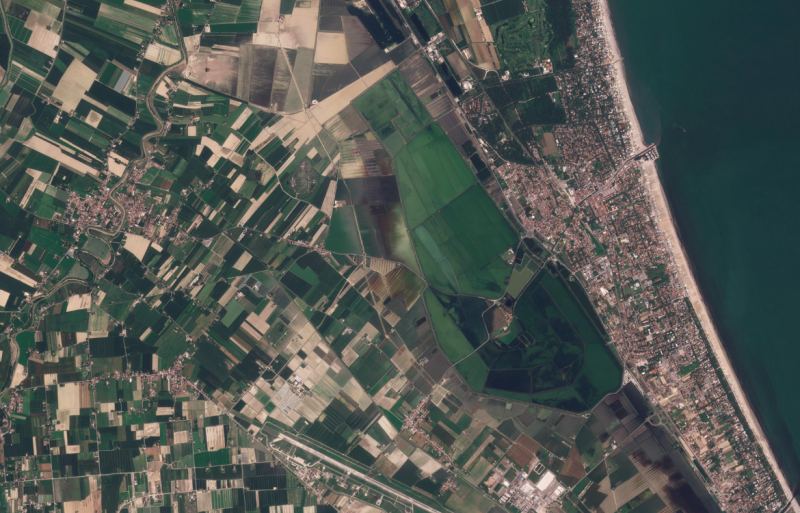
In Cervia (Italy), the challenge is different but equally significant. One of the Mediterranean's last active saltworks, Cervia demonstrates how traditional salt production, biodiversity conservation and sustainable tourism can coexist within a protected wetland. The devastating floods of May 2023, however, exposed both the vulnerability of this ecosystem and its crucial role in flood mitigation. The investigation explores whether simply rebuilding damaged infrastructure is the most effective response in an increasingly flood-prone region, or whether restoring wetlands as nature-based solutions could deliver greater long-term environmental and economic benefits.
Together, these stories show that the cost of environmental degradation extends far beyond restoration works. By connecting local investigations with broader European debates on nature restoration, climate adaptation and ecosystem services, the project asks whether investing in healthy wetlands should be considered not simply an environmental obligation, but a long-term public investment.
Key findings
Mediterranean salt marshes are socio-ecological systems whose ecological functioning depends on active water management.
- In Ulcinj (Montenegro), a flawed privatisation followed by more than a decade of institutional neglect has resulted in ecological degradation alongside economic losses exceeding €40 million. Since salt production stopped in 2013, Montenegro has lost an estimated 187,000 tonnes of salt (worth around €19 million), while restoring the hydraulic system is expected to require a further €19 million. Satellite imagery and ecological monitoring document declining salinity, habitat degradation and the collapse of one of the Adriatic Flyway's key migratory bird stopover sites.
- In Cervia (Italy), the 2023 floods demonstrated both the vulnerability of coastal salt marshes to climate change and their strategic role in flood mitigation. The investigation questions whether rebuilding damaged infrastructure as it was before is economically sustainable in one of Italy's most flood-prone regions, arguing that wetland restoration should instead be integrated into climate adaptation strategies as a nature-based solution.
Environmental economics makes it possible to estimate not only restoration costs, but also the hidden value of ecosystem services that are rarely considered in public decision-making.
Delaying restoration increases both ecological damage and long-term economic costs, making early investment in healthy wetlands more effective than paying for the consequences of environmental decline.
Methodology
Following FACTA's method, that applies the scientific methodology to investigative and data journalism, the project combines investigative journalism with scientific research and environmental-economic assessment. The reporting integrates a systematic review of scientific literature and policy documents, high-resolution satellite imagery from Planet Labs and the Copernicus Sentinel constellation, field reporting in Italy and Montenegro, and interviews with researchers, former saltworks workers, environmental organisations, public authorities and local communities.
To complement the journalistic investigation, eco&eco developed an environmental-economic framework to assess the hidden costs of salt marsh degradation and restoration. Rather than assigning a market price to nature, the analysis estimates the value of ecosystem services - including biodiversity conservation, flood regulation, carbon storage and climate resilience - and compares these benefits with the costs of environmental degradation and delayed restoration. The project combines Earth observation, investigative reporting and environmental economics to develop a replicable methodology for investigating wetland restoration across Europe.
Images:
1. The abandoned warehouse in the degraded Ulcinj Saltworks. © CIN-CG
2. The Cervia Saltworks flooded after the 2023 Emilia-Romagna floods. © Planet Labs / FACTA.EU