Erected during a migration crisis, this wall cuts through the Białowieża Forest, a UNESCO World Heritage site. It was rushed through under a special law without standard environmental impact assessments and sidestepping some international obligations (e.g., the Espoo Convention), leaving residents and scientists excluded and turning the wall into a symbol of tension between security and nature protection.
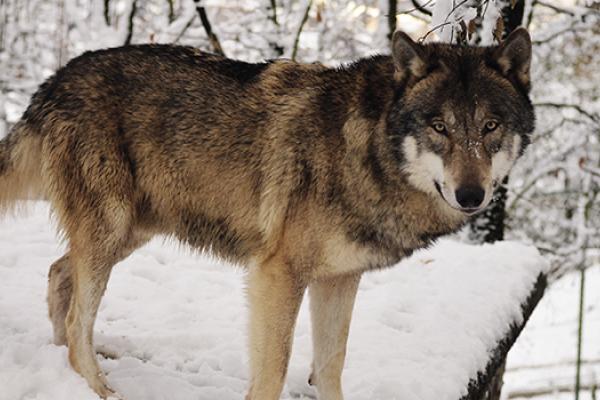
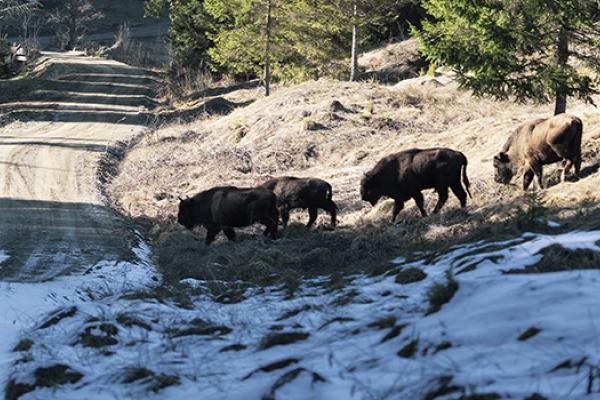
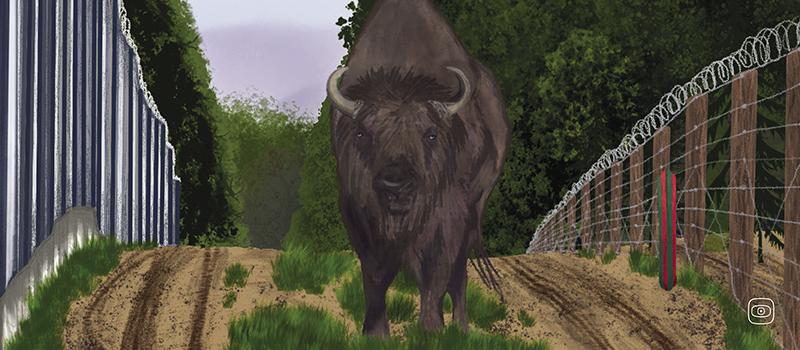
The stories reveal a “dual reality”: ecological damage alongside human hardship. In border villages such as Teremiski, bison and wolves are appearing more often near homes, leading to dangerous incidents. In the forest, researchers documented debris, damaged trees, and animal carcasses linked to heavy machinery. Meanwhile, migrants still cross and suffer in the woods, and animals – especially bison – can become trapped in a 37 km² “no man’s land” between the new Polish barrier and Belarus’s older “Sistema” fence.
Researchers from the Mammal Research Institute of the Polish Academy of Sciences and the University of Warsaw used a multidisciplinary approach to document the barrier’s footprint. They ran daily field surveys to map waste and habitat damage, deployed camera traps to track large carnivores, and used winter snow tracking to see which species could navigate the barriers. They also conducted soundscape analysis (helicopters, gunshots) and collected qualitative insights through informal conversations with soldiers and local residents.
The results suggest the barrier is reshaping the ecosystem by blocking movement and reducing gene flow for rare species like lynx. Large mammals now avoid the border zone, while mid-sized predators such as foxes are drawn to military posts by food waste, creating disease-risk hotspots. Although 24 wildlife crossings exist, researchers report they are never open. Experts argue for international coordination to open the gates and, when politics allow, remove the barriers, since fragmentation threatens the forest’s ecological value.
Image: Scientists know about at least one bison trapped between the Polish and Belarusian barriers. None of the countries created a working evacuation plan for it. Illustration by Rebel Stroke.