Across the Mediterranean, wildfires are becoming more frequent, intense and destructive. While public attention often focuses on emergency response and the immediate impacts of fire, less is known about how communities are working to prevent wildfires and restore affected landscapes in the long term.
This cross-border investigation examines grassroots responses to wildfires in Galicia, Spain, and the İzmir region of Turkey. Through field reporting, interviews and visual documentation, the project explores how local communities, farmers, environmental organisations and land managers are developing innovative and traditional approaches to reduce fire risk, regenerate ecosystems and strengthen resilience to climate change.
The investigation also compares two contrasting governance models. In Galicia, communal land ownership structures known as Comunidades de Montes enable collective forest management and prevention initiatives. In Turkey, where forests are largely under state control, community participation is more limited, creating different challenges and opportunities for local action. By highlighting these experiences, the project aims to contribute to broader discussions on wildfire prevention, ecological restoration and climate adaptation across the Mediterranean region.
Key findings
- Galicia's Comunidades de Montes play a central role in wildfire prevention through collective land management.
- Nearly half of Galicia's territory is managed under communal ownership structures that encourage local stewardship.
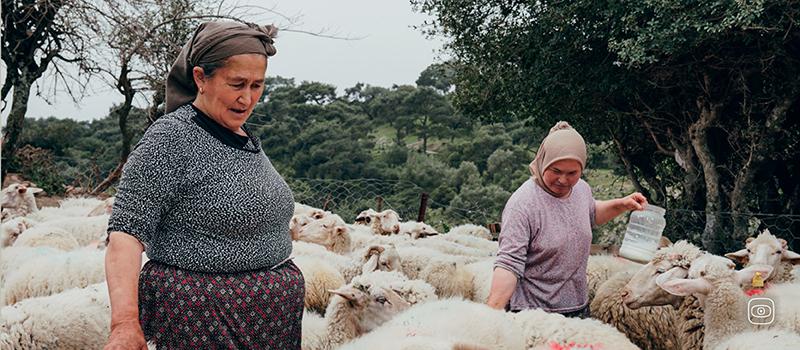
- Community-led prevention measures include forest clearing, controlled burning and livestock-based fuel management.
- Turkey's highly centralised forest governance limits the capacity of local communities to participate in prevention efforts.
- Local initiatives in Turkey exist but often depend on individual leadership and operate within significant legal constraints.
- Grassroots knowledge and collective action can complement or compensate for shortcomings in institutional wildfire policies.
- Prevention and ecological restoration receive considerably less attention and investment than fire suppression in both countries.
Methodology
This investigation combines field reporting, data analysis and visual storytelling. The reporting team conducted fieldwork in Galicia (Spain) and the İzmir region (Turkey), spending ten days in each location. During the research, the team interviewed local organisations, environmental NGOs, scientists, community leaders, farmers and residents directly affected by wildfires. We documented prevention, reforestation and land-management initiatives through photography, video and on-the-ground observation. The investigation also draws on forestry databases, land ownership records, academic research, public documents and geospatial analysis tools. All interviews were transcribed, translated where necessary and fact-checked. A comparative approach was used to identify similarities and differences between the two regions, allowing us to examine how governance structures, land ownership models and community engagement influence wildfire prevention and ecological restoration efforts.