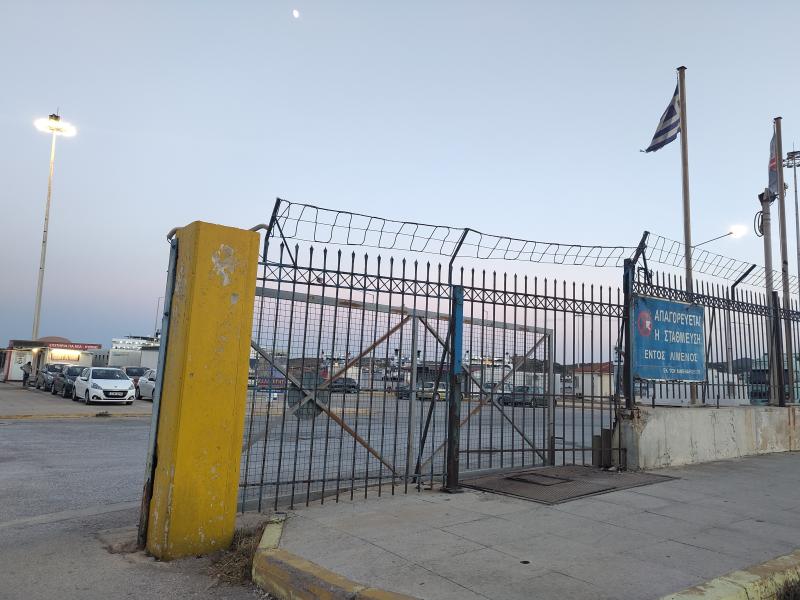
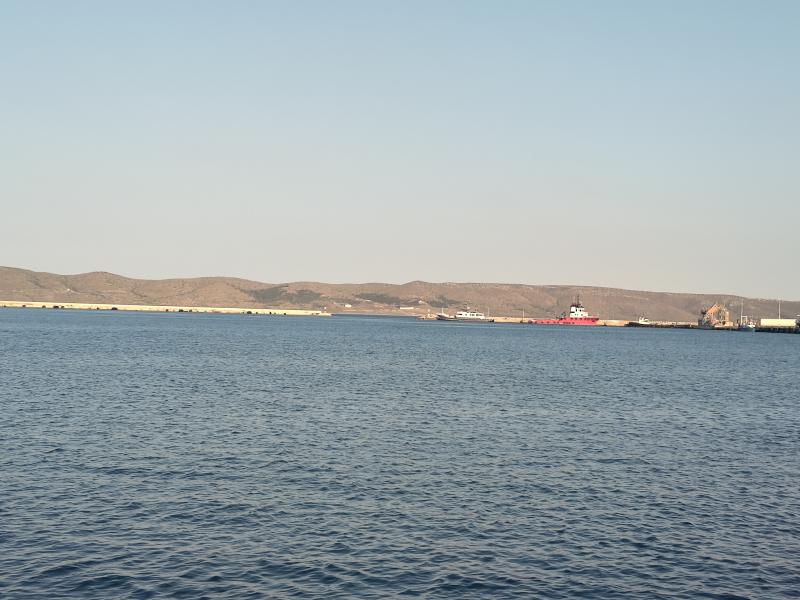
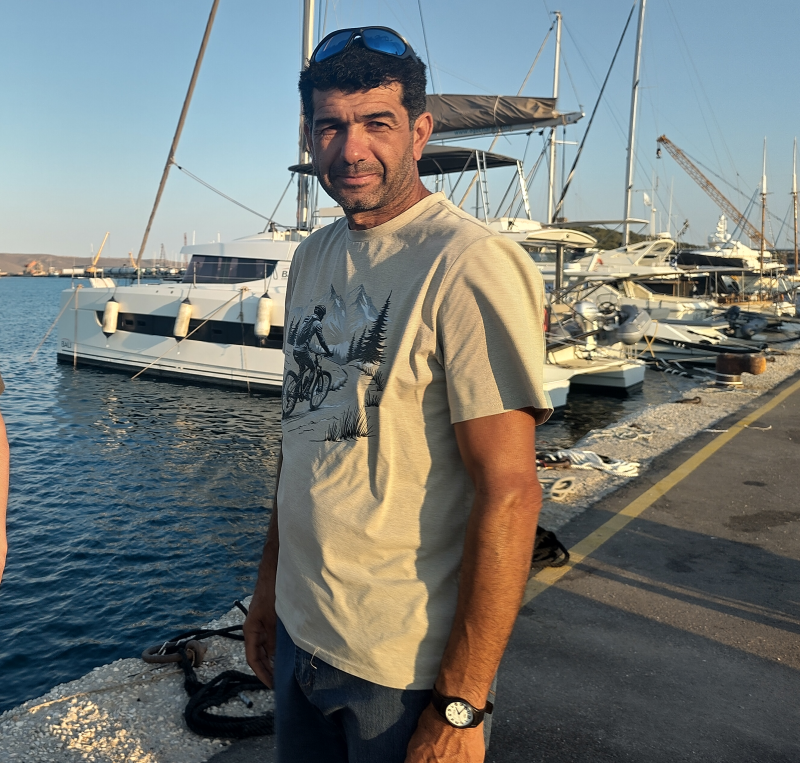
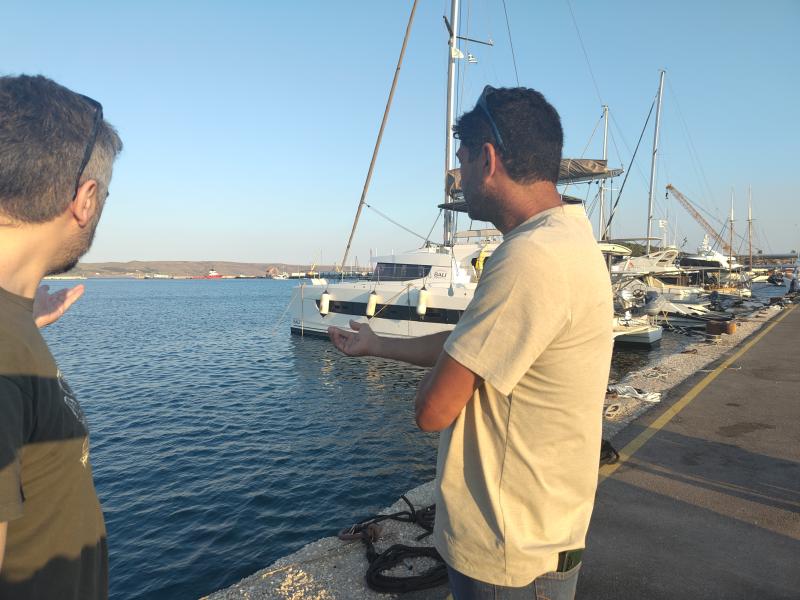
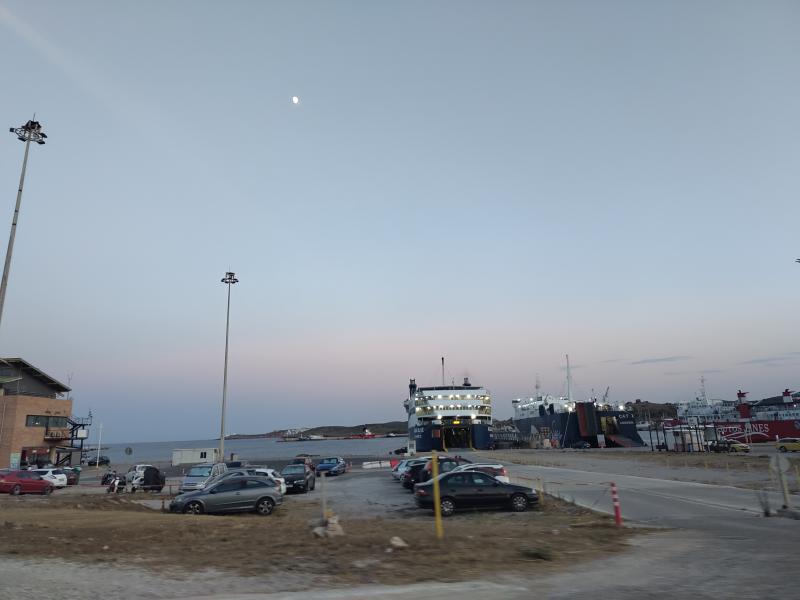
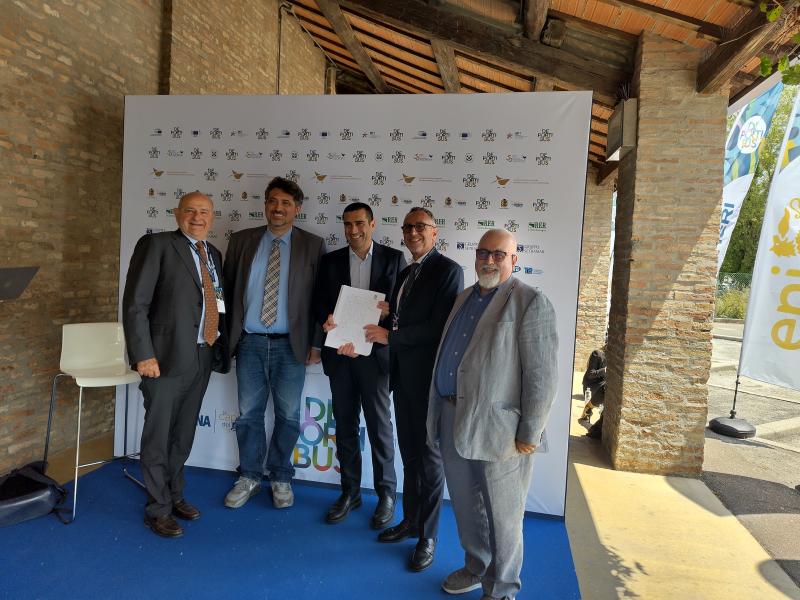
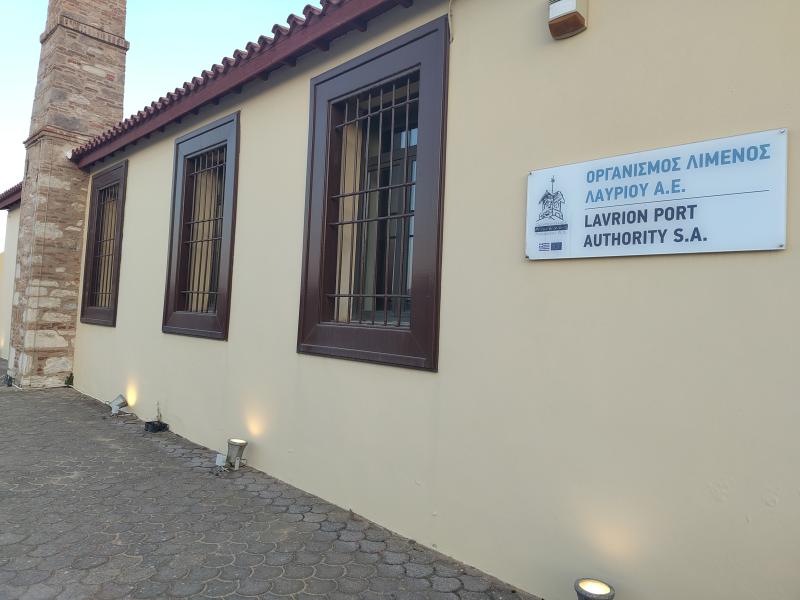
The Authority of the small port of Lavrio (near Athens) is a partner in the UnderSec project funded with almost 6 million euros of research European funds (Horizon), and underwater cybersecurity technologies are being tested here. The project involves 22 members, all European except three Israeli entities: the Israeli Ministry of Defence, Rafael Advanced Systems, one of the country’s leading arms manufacturers, and Tel Aviv University. Currently state-controlled, the port of Lavrio has been undergoing privatisation for about a year, with the sale of 51% of the shares of the Port Authority. Among the interested buyers is also Israel Shipyards, an Israeli company deeply involved in Israel’s industrial and military ecosystem.
Among the technologies tested in the UnderSec project there is also the Broadlink modem, owned by Rafael Advanced Systems, an underwater acoustic communication system designed to transmit audio, images and video between submarines, marine drones and sensors. According to technical specifications, these modems can operate in the low–mid frequency range between 4 and 10 kHz and in the mid–high frequency range between 15 and 35 kHz, frequencies that may interfere with those used by many dolphin species. According to the official brochure, it has been “battle tested”, and is already in use on underwater drones, special forces vessels and Israeli military divers. It is not excluded that it has also been used to intercept and attack the flotilla.
Although the port of Lavrio falls within the Natura 2000 SPA site “Strait of Makronisos”, many of the technologies used in the UnderSec project include low-, medium- and high-frequency sonar, acoustic modems, loudspeakers, drones, sensors generating electromagnetic waves, radioactive neutron generators, in short all instruments that - according to experts - have impacts on the marine environment and fauna. The investigation has unveiled that environmental authorization required by the Greek law for such a project has not been requested. The lead researcher on the UnderSec project for Rafael Advanced Systems (Oren Gal, head of the drone swarm laboratory at the University of Haifa) also works at MIT in Boston on two projects funded by the Israeli minister of Defence, which, according to the report “MIT Science for Genocide”, may have contributed to the genocide in Gaza.
Key Findings :
- The port authorities of Valencia and Lavrio (Athens) between March and June 2026 allowed the testing of the Broadlink underwater communications modem “war-tested” by the Israeli company Rafael Advanced Systems, to integrate it with sensors and autonomous underwater vehicles from companies in Italy, Spain, Portugal, and Greece.
- In Greece, whose companies and universities received around two-thirds of UnderSec's funding, the test was carried out in cooperation with the Greek armed forces, according to the UnderSec website, but the Greek navy denies any involvement.
- No environmental evaluation was provided by the project coordinator, despite the environmental risks associated with the experiment, which used "explosive and narcotic simulants" and radioactive materials, and despite the fact that the port of Lavrio is a Natura 2000 protected site.
- The algorithms that process the data from the various sensors were developed for Rafael by Professor Oren Gal, head of the Drone Swarm Laboratory at the University of Haifa, and former founder and technology director of the Israeli Navy's Autonomy and Data Science Research and Development branch , and later of the Department of Defense, Development, and Reconstruction at the IMoD (Israeli Ministry of Defense). Since 2019, he has also been working on research at MIT in Boston funded by the IMoD, which has military applications in "drone aerial bombardments, protest surveillance, the pursuit of fleeing targets, and the use of tear gas during home demolitions," as highlighted in the MIT for Palestine network's "MIT Science for Genocide" report.
- Although the European Commission has reiterated that it is "a civil security research project funded under Cluster 3 (Civil Security for Society) of Horizon Europe," UnderSec was born and developed with strong ties to NATO and with the goal of commercialization in military contexts. Nato navies and the Saudi Arabian Navy and Army were interested in monitoring the project and acquiring the final product.
- In the last months as the “Broadlink” modem was being tested as part of Undersec, DSIT, a Rafael subsidiary specializing in sonar systems and underwater security, presented a new Underwater Domain Awareness (UDA) solution for continuous, long-range underwater monitoring. Broadlink is among its technologies publicized in the specialized press. On April 6, 2026, DSIT Solutions announced the signing of an agreement to supply its Tactical Underwater Domain Awareness sonar systems to a "leading" NATO navy.
- Fraunhofer-Gesellschaft, coordinator of Undersec, signed an agreement in March 2025 with the IIA (Israel Innovation Authority, an organization dependent on the Israeli government with offices in Brussels) to promote Israeli technologies in Europe through projects such as Horizon Europe. The collaboration, signed in the midst of the genocide in Gaza, suggests that UnderSec can represent a model, which Germany intends to use to include technologies and artificial intelligence “made in Israel” in German and European rearmament.