Rising sea levels due to global warming are threatening many of Europe’s coastal towns. Many local authorities tend to focus on responding to disasters, such as storm surge recovery efforts, rather than investing in preventive strategies or managing the relocation of areas at greatest risk.
Investments in adaptation, defence or relocation are solely intended to preserve the most important settlements and economies, whilst more remote areas with inhabitants and ecosystems worth preserving are sacrificed. These decisions impact property prices, local economies, and public perceptions of risk. The investigation demonstrates these claims through three case studies of different European cities: Rimini (Italy) and Rotterdam (the Netherlands) are presented as examples of protected cities, while Fairbourne (Wales) is presented as an example of a town left to fend for itself.
Key findings:
- In Rimini, Italy, a significant urban project has raised the seafront by one metre and created submerged flood retention basins. This €110 million investment was made to preserve the area's beach tourism. In addition, the Emilia-Romagna Region has allocated funds for beach nourishment, spending €23 million in 2023, with costs having risen significantly over the last twenty years. While these public funds are being used to protect a private economy, less profitable areas with precious ecosystems at serious risk due to seawater intrusion are being sacrificed or neglected. Furthermore, the investigation reveals that significant resources have been allocated to a military firing range on the Ravenna coast as part of a €17 million defence project. This seems disproportionate given that the surrounding coastline is suffering from severe and uncontrolled erosion.
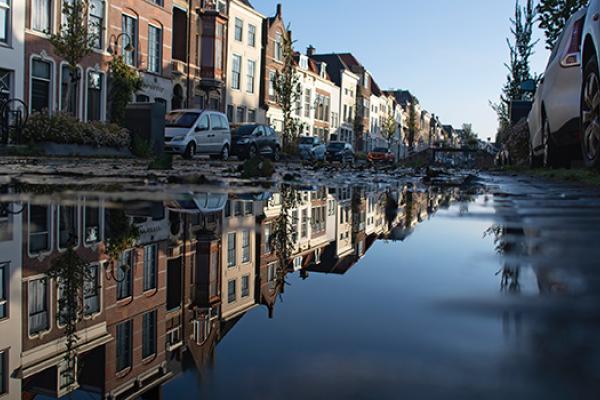
- Rotterdam (the Netherlands) is well protected against flooding as it was designated a key protection area over 70 years ago. However, as housing demand increases, more and more buildings are being constructed outside the dykes. The municipality does not take responsibility for flooding there, and inhabitants cannot insure their houses. This is problematic for some inhabitants. However, according to experts and the authorities, living outside the dykes is no less safe than living inside the dyked area. Location has no impact on housing prices: a data analysis of the last 10 years shows that the two neighbourhoods where property values have increased the most are both outside the dykes.
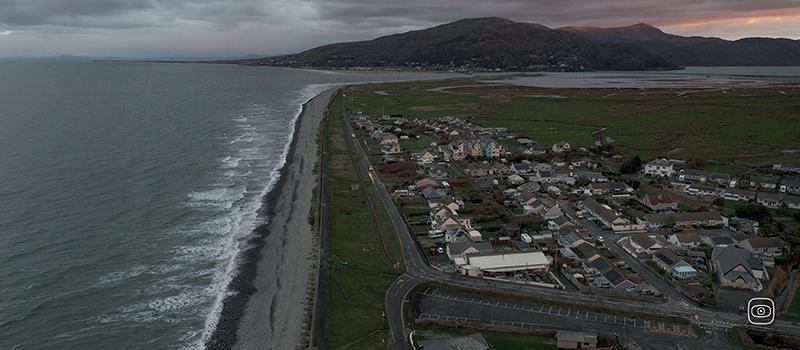
- Residents of Fairbourne, a small Welsh village situated on a floodplain, have been left reeling by the announcement that the town will have to be relocated or abandoned by 2056. Although the BBC first reported the decision in 2016, local authorities subsequently denied it. Nevertheless, the announcement has had an immediate impact, including a collapse in property prices and an inability to secure a mortgage or home insurance. The local authorities currently refuse to discuss the matter with the press and appear to have no plan to manage the town’s enormous flood risk or compensate affected residents. Substantial resources are still being spent on providing temporary protection for the town against coastal flooding.
Methodology:
- Interviews with inhabitants, experts and authorities in Rimini, Rotterdam and Fairbourne.
- Data analysis of housing prices in Rotterdam, broken down by neighbourhood, between 2016 and 2026.
- Analysis of housing price data in Fairbourne.
- Analysis of funding for coastal protection in Rimini and the Emilia-Romagna region.
Dataset:
Photo by Michele Lapini, An aerial view of Fairbourne, a Welsh village that has become an international case because its residents are considered to be the first 'climate refugees' in the UK, due to the high risk posed by rising sea levels. risk linked to rising sea levels.