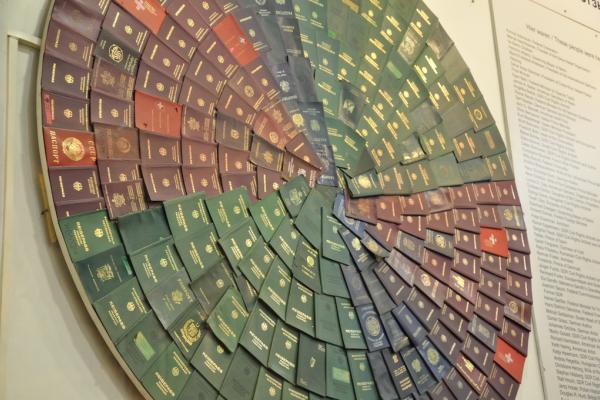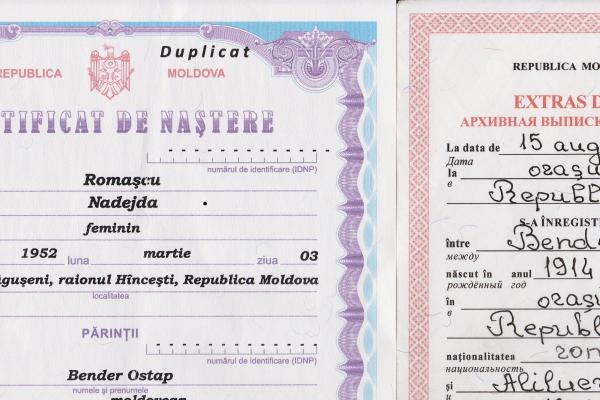

Romania restores citizenship to descendants of people born on territory it held before 1940, a legal route used by hundreds of thousands of Moldovans and Ukrainians. Among the alleged beneficiaries are a member of a family at the core of Ramzan Kadyrov’s rule in Chechnya, the former head of a Russian state explosives manufacturer, a sanctioned former Gazprom executive, two men flagged by Russian authorities as extremists, and leaders of a movement that Ukraine calls pro-Kremlin and wants for treason. Journalists followed the scheme from a border village where thousands of people were registered at a single address, through notaries’ offices in Chișinău and civil registries in Bucharest, to companies in other European countries.
Key findings
- Romanian courts are hearing hundreds of cases to annul documents obtained with forged citizenship certificates. In the 55 cases the reporting team examined in detail, they identified more than 30 beneficiaries as Russian citizens, at least eight of whom applied as Ukrainians.
- Prosecutors’ files obtained say 89 forged citizenship certificates were used to obtain 91 genuine Romanian ID cards between 2022 and 2024.
- The forged certificates claimed to come from Romanian consulates, embassies or the citizenship authority itself. Several were crude, including one dated in Istanbul but bearing the seal of the embassy in Bratislava, and two that shared a serial number.
- The alleged beneficiaries include a man decorated by Ramzan Kadyrov, the former head of a Russian state explosives maker, a former Gazprom executive sanctioned by the US, UK, Ukraine and Australia, four leaders of the Allatra movement wanted in Ukraine for treason, and a man on Russia’s list of terrorists and extremists.
- Some alleged beneficiaries have travelled in the Schengen area or have companies in Slovakia, Spain, Portugal, Latvia and the UK.
- Romania was warned about forged documents and the influence of intermediaries in its citizenship process as early as 2018.
Methodology
- Court records: the team of journalists scraped the Romanian court portal and identified almost 800 annulment cases, then reviewed 55 case files in detail, alongside criminal case files.
- Database search: They matched names, dates of birth and parents’ names against sanctions lists, leaked Russian databases, Ukrainian wanted lists, and company and property registries across Europe.
- Documents: the team obtained a 2019 government inspection report, prosecution and court files, freedom of information replies from Romanian authorities, and company and property records.
- Field reporting: Reporters visited registered addresses in Romania, Ukraine and Slovakia and notaries’ offices in Moldova. They interviewed intermediaries, whistleblowers, notaries, local officials, lawyers, and financial crime and document experts, and contacted the alleged beneficiaries for comment.
- Collaboration: Partners in six countries shared research through a common database and pursued local angles.