
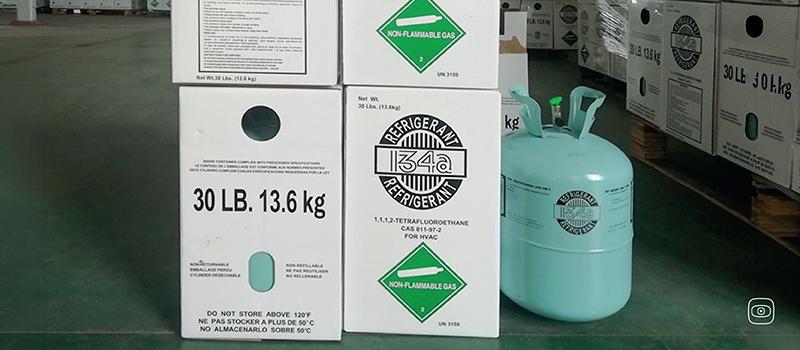
HFC gases are powerful refrigerant gases used in everything from supermarket freezers, air-conditioning units in cars to insulation foams in our walls. While they were introduced around the world as a cleaner alternative to the ozone-depleting CFCs, HFCs warm the planet several thousands times more than carbon dioxide.
The EU and the UK are rapidly phasing out these gases, but this cross-border investigation shows that an illegal market for them is still thriving -- both physically and digitally. We show that major online platforms, including Alibaba, Facebook Marketplace and Made-in-China, are rife with adverts of HFCs, and that vendors are willing to ship these to Europe, without requesting necessary documentation.
We trace the supply chain of this illegal market: manufactured in China, and entering the EU and the UK through constantly evolving trade routes in the Balkans and Eastern Europe, including Bulgaria, Serbia, and Romania, and to countries that are major consumers of these gases, including Italy, the United Kingdom, and beyond.
Key findings
- Over two months, we went undercover as potential buyers seeking disposable cylinder shipments to the UK, Romania and Italy on two platforms with the largest numbers of listings: Alibaba and Made-in-China. Around 80 percent of the companies who responded to us were willing to sell banned disposable cylinders. We contacted 65 companies. Several more were willing to ship regular HFC cylinders without asking for evidence that the buyer held the quota or documentation normally required.
- We learnt that there is no single method for moving HFCs into Europe. Authorities have found gases mislabelled as other chemicals, left undeclared aboard vessels, hidden beneath blankets, and concealed inside polystyrene boxes. Another known technique exploits one of the mechanisms designed to make legitimate European trade easier, known as T1.
- Trade routes are also varied and constantly changing. The gases are primarily manufactured in China. From there, key routes run from Turkey to the Balkans and onto the EU and the UK, Albania and Bulgaria into Italy, and Ukraine into Romania. Routes also link North Africa to southern Europe, from Greece through Turkey to the UK, and from the UK to the US.
- In Italy, we learnt that a shop in a small town called Pagani had a stock of hundreds of non-disposable HFC cylinders and were willing to sell them. They obtained these from Algeria - a previously unreported trade route into the EU. Data also showed that Italy has seized more than 800 tonnes of HFCs since 2019, making it the country with likely the greatest number of illegal confiscations globally.
- In the UK, HFC consumption has continued to rise alongside a slower phase-down schedule than the EU’s. Freedom of information requests reveal £4.4 million in civil penalties over seven years, yet repeat offences persist. Illegal shipments have been documented from Turkey, Greece and Iraq, sometimes via Bulgaria, and from the UK to the US. The true scale is likely higher, with customs officials lacking real-time access to import quota data and weaknesses in the quota representative system hampering enforcement.
- In Romania, authorities seized more than 100 tonnes of HFCs at the Ukrainian border. Yet only a fraction of this quantity legally entered the country through Ukraine, public records show. Court records reveal this gap may come from smugglers exploiting the EU's external transit procedure and established cigarette-smuggling networks.
- In Serbia, interviews with dozens of authorised refrigerant handlers indicate that illicit freon flows take place between Serbia and its neighbouring countries. A significant black market operates through unlicensed workshops and technicians who handle refrigerants outside official control systems, including refilling and trading gases informally.
Methodology
The investigative team posed as buyers online and in person, analysed social-media marketplaces, reviewed court documents, and gathered seizure data from authorities across Europe.