ZAVENTEM - Never before did a terrorist attack have such an impact on daily life as 9/11. More than anything else, plane traveling became quite a bit more strenuous. Budgets for the war on terror are growing every year. Security forces want to intercept every possible terrorist and the security ...
CAIRO - The uprisings in the Arab world have been one of the headlines of the news for months. Especially the developments in Egypt - the most populous and important Arab country - are closely followed. Especially now, when the first free and open elections are in full swing. The question everyone ...
BUSAN - From 29 November to 1 December 2012, the topic of development aid will be high on the international agenda. In Busan, South Korea, more than 2,000 government, multilateral organisation and NGO representatives will work on making development aid more efficient. In an increasingly complex and ...
BRUSSELS -There are few issues that have been as socially sensitive as immigration in recent years. At the same time, the policy on migration goes in all directions. While European countries mainly want to make access more difficult for newcomers and expel more people, the European Commission is ...
WASHINGTON DC - 'De kleuren van Amerika' (The colours of America) provides an overview of American diversity in all of its forms. The multicultural society is not all sunshine and roses, but a work in progress, with beautiful and ugly sides, successes and failures.
KIGALI - Paul Kagame's Rwanda has been sailing its own political course for sixteen years now, with a great deal of international support. Joris Verhaegen and the theatre group A Two Dogs Company want to contribute to the debate about this development policy with their play Talk. Verhaegen wrote an ...
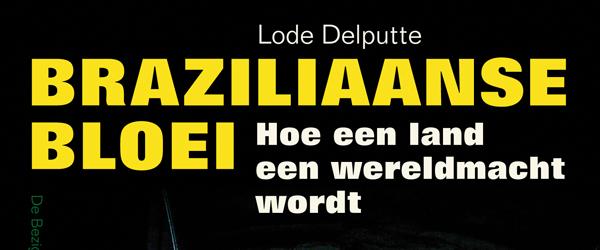
BRASILIA - For 'Braziliaanse bloei' (Brazilian boom) Lode Delputte travelled throughout the country. In his passionate stories, Delputte outlines the great changes that make Brazil such a fascinating country.
LJUBLJANA - From 1991 to 1995, the Yugoslav wars wreaked havoc on the Balkans. War crimes of all kinds and sorts hit the region with such ferocity and frequency that by the end of the 20th century Yugoslavia had been torn apart. One of the crimes committed was the illegal trade in arms by government ...
AMMAN - Journalists Majd Khalifeh and Pieter Stockmans, and photographer Xander Stockmans travel across North Africa and the Middle East for 5 months in search of dreams of freedom and happiness of ordinary people, workers, doctors, activists, young people, imams, priests, professors, trade union ...
SARAJEVO - In December 2009, for the first time in eighteen years, a direct train departed from Belgrade to Sarajevo, from the current Serbian to the Bosnian capital. In 1991, that connection had been suspended. President Tito's multinational Yugoslavia fell apart, and for four years a war raged ...
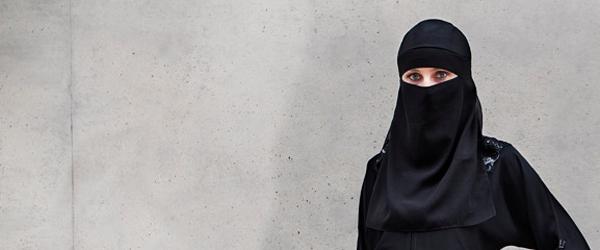
RIYADH - The attacks of 11 September 2001 sent shockwaves around the world. Ten years later, journalist Lisa De Bode reveals that a quiet gender revolution is underway in the Arab world that could pave the way for greater democracy.
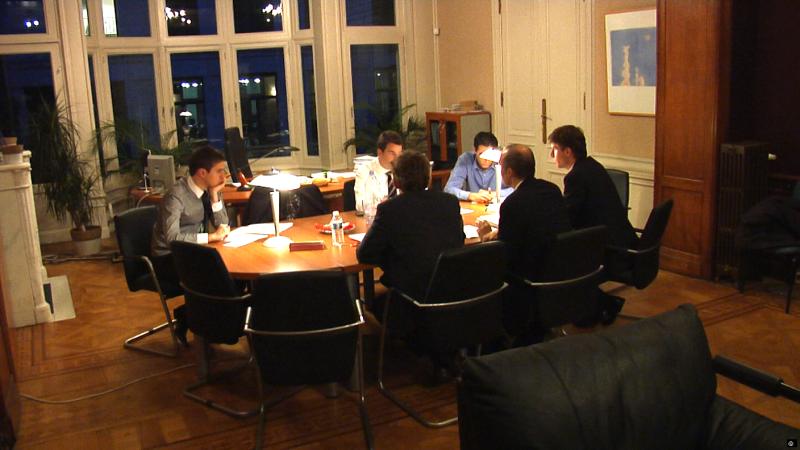
BRUSSELS - A fascinating view behind the scenes of the Council of Ministers. Here, the idea of European unity is not at all obvious. Also, when ministers are occupied with national matters, diplomats seem to have a substantial influence in shaping European decisions.
BRUSSELS - targetBRUSSELS gathers information on the activities of Eastern European secret services in Brussels during the Cold War. The research is based on the intelligence archives of the former German Democratic Republic, Bulgaria, Czechoslovakia and Romania.
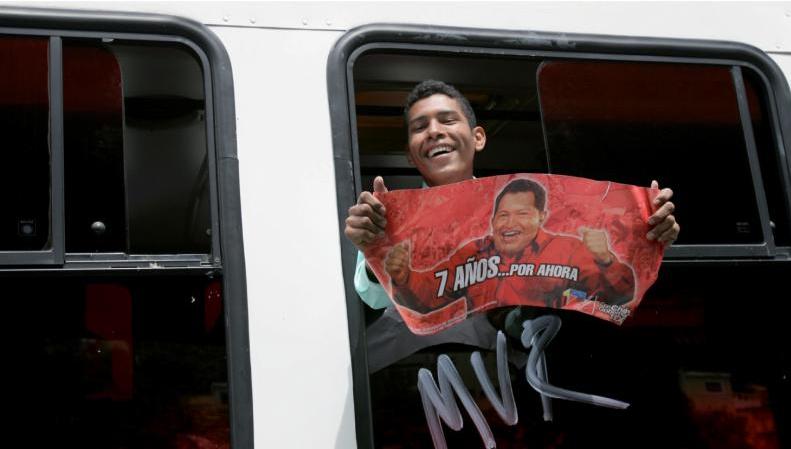
CARACAS - In The Oil King, Edwin Koopman paints a sobering portrait of a divided country. What began as an investigation into the origins of a Latin American revolution evolved into a deeply personal narrative of power, ideals, hatred, passion, and disappointment.
ISLAMABAD - The American president Obama described a part of Pakistan as ‘the most dangerous place on earth’. The country is dangerous in two ways: dangerous to itself, as few places yield as many bomb attacks and victims, but also dangerous to the rest of the world, as the bombings are exported and ...
Xinjiang: a melting pot of cultures at the end of the world
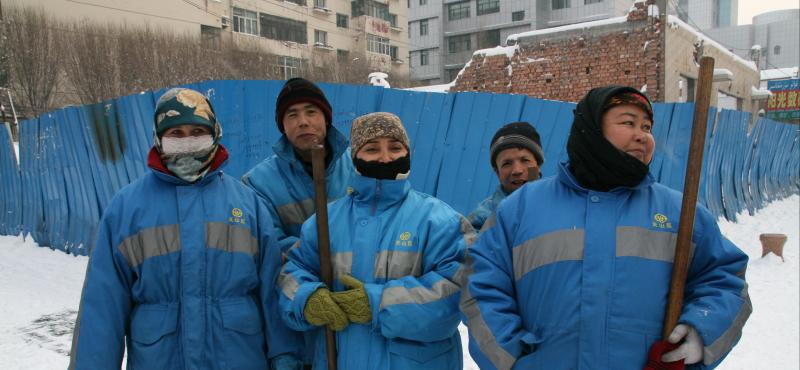
URUMQI - Xinjiang is a province of China, with the statute of ‘Xinjiang Uyghur Autonomous Region’ under control of the central Chinese government. It is very Chinese and at the same time it seems not Chinese at all.
YAMOUSSOUKRO - Anthropologist Karel Arnaut and photographer Raymond Dakoua have been following the patriotic militants since 2003. They describe and show the ex-militia members in their everyday environment and introduce the public to the world of the young ex-combatants, their activities and ...
Bolivia takes production of lithium into own hands
SALAR DE UYUNI - Uyuni is a backward region in the South of Bolivia. Bult the salt lake of Uyuni is rich with lithium, the commodity for the production of batteries, soon also for batteries for electrical vehicles. For this raw material a game of chess is being played between some multinational ...
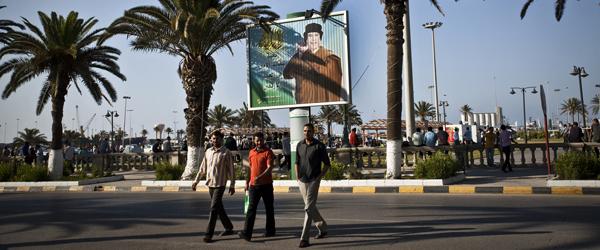
TRIPOLI - Sub Saharan refugees and migrants get stranded in Libya, one of the most important transit countries, on their way to Europe. The European Union tries to keep migrants from reaching Europe by making expensive deals with the Libyan Government.
SREBRENICA - 15 years after the war in Bosnia over 7000 refugees still live in ‘temporary’ refugee camps in the heart of Europe. The Bosnians themselves want to forget about them, the NGO’s have left the country, moved on to new conflict zones. But the people are still there.
BRUSSELS - Everywhere people are on the move. In search of a better life. Europe is bursting at the seams with new citizens. The old continent is struggling with the immigration phenomenon; and handling it with amazing ineptitude. The question is not: who is welcome and who is not? The question has ...
KINSHASA - In July 2009, the American magazine Foreign Policy published its annual list of failed nation-states. The Democratic Republic of Congo occupied fifth place, after notoriously dysfunctional states like Somalia, Zimbabwe, Sudan, and Chad, and ahead of war-torn countries like Iraq and ...
TALLINN - According to experts, Estonian financial institutions are popular among criminals for laundering money because Estonia offers cheaper currency transactions than Russia and less regulation than in the EU. Its convenient location for such transactions adds to the appeal.
Belgian Minister of Finance Reynders mocks parliament
BRUSSELS - Due to the banking crisis the Belgian government had to bail out 4 major financial institutions in 2008 and 2009 to prevent them from bankruptcy. Fortis, KBC, Dexia and Ethias initially received more than 20 billion of tax payers' money which they will have to reimburse eventually. But ...
GABORONE - Ask any average Belgian, or any European for that matter, to name three words he associates with sub-Saharan Africa. The odds are big he will come up with for instance ‘war’, ‘hunger’ and ‘rape’.
NOVOSIBIRSK - Debby Huysmans shows a photographic research on forgotten and isolated communities in Siberia. The two longest rivers of Siberia, the Yenisey and Lena, guided the photographer through the desolated area in search of individuals who experience this area as their biotope and the marks ...
MUMBAI - With financial support from the Fonds Pascal Decroos, Nick Meynen followed carbon credit money flowing from Belgium to India, where he discovered a desert full of mirages. Part from the fraud and abuse, he also noticed the difference in approach between Flanders and Belgium, the buyers of ...
TARINKOT - How does a man with only a motorbike, a satellite phone and a small group of confidants become President of Afghanistan? In Expedition Uruzgan, Bette Dam reveals how Hamid Karzai liberated the province of Uruzgan from the Taliban after 11 September 2001. This was a crucial moment in ...
BUDAPEST - One year ago, the Belgian government purchased two million tonnes of CO₂ emission rights from Hungary. This €26 million investment is intended to help the country meet its obligations under the Kyoto Protocol to reduce emissions by 7.5 per cent by 2012 compared to 1990 levels.
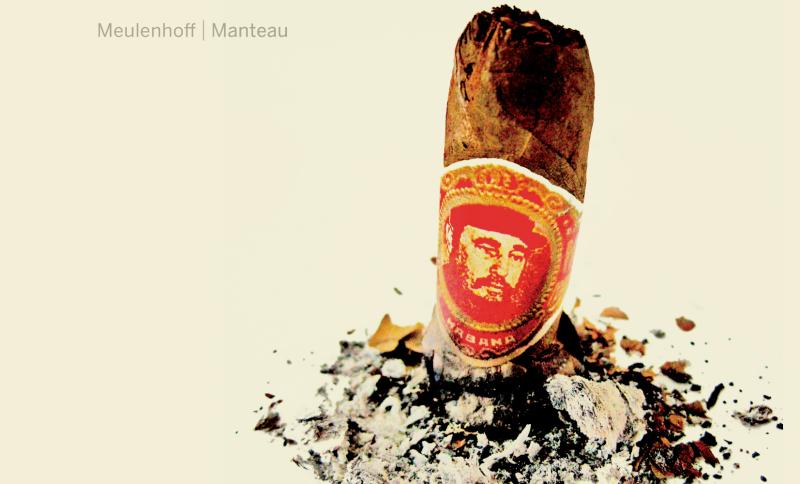
HAVANA - Everyone has an opinion about Cuba, but in 'Cuba after Castro' Lode Delputte shows what is really at stake. Cuba's future is inextricably linked to its self-proclaimed glorious past. No reasonable person would doubt that Fidel Castro's time is long gone. Even the political elite in Havana ...